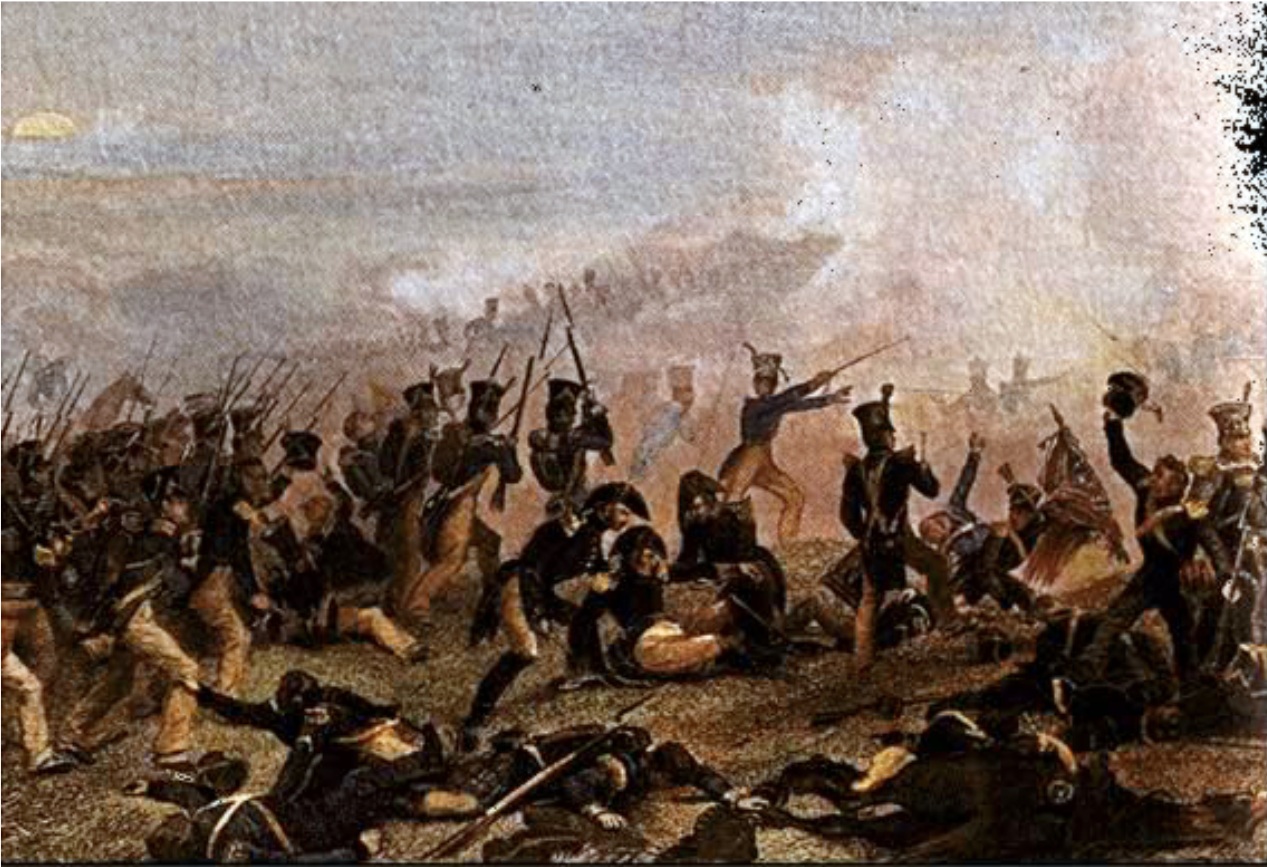

Here at “From the History Room,” last week we saw that although a soldier named James Campbell is listed in “Soldiers of the American Revolution Buried in Illinois” (1976) as a Revolutionary War veteran who died and is buried in Tazewell County, in fact Pvt. Campbell was a War of 1812 veteran who settled in Southern Illinois, with no known connection to Tazewell County.
However, in the course of our research, we discovered that another soldier, Pvt. Earl Armstrong (1772-1834), is listed in the Pension Roll of 1835 as a resident of Tazewell County. Earl Armstrong is not included in “Soldiers of the American Revolution Buried in Illinois” nor in any other list of Revolutionary War soldiers. Was he a Revolutionary War patriot who was somehow missed by earlier researchers? Let’s find out what we discover about him.
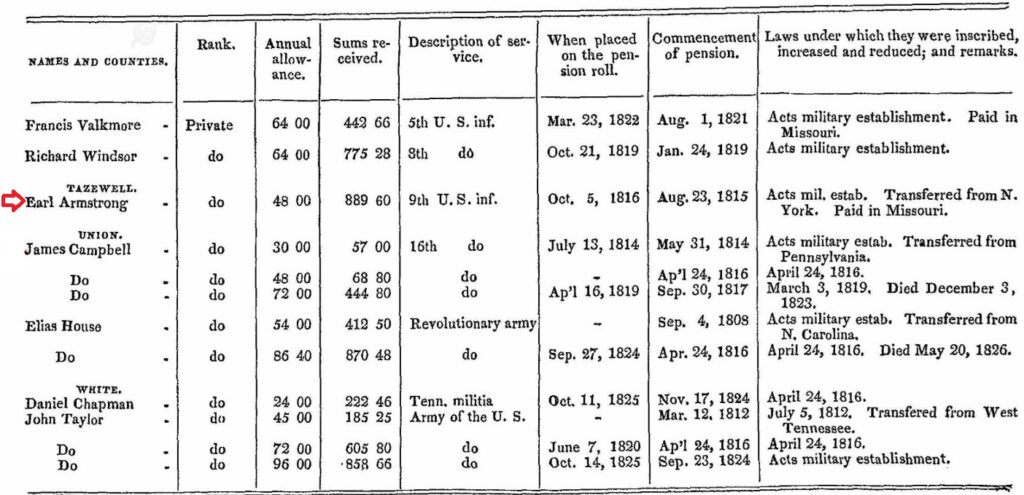
From the Pension Roll of 1835, we learn that Earl Armstrong first began receiving his military pension in New York State in 1815, but his pension payments were transferred from there to Missouri. Checking the Missouri pension rolls, we do indeed find Earl Armstrong there:
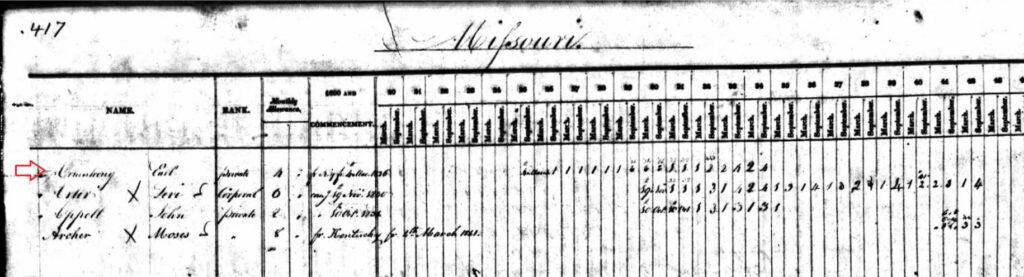
The Pension Roll of 1835 correctly reports that Earl Armstrong’s pension had been transferred from New York, but no New York pension payments for him are recorded in these Ledgers of Payments. As we see from the above shown document, Armstrong’s pension payments were completed in Missouri, where his final pension payment was sent in Sept. 1834. However, the fact that he had his pension payments sent to Missouri does not mean he had settled in Missouri. Rather, Earl Armstrong did indeed settle in Central Illinois. In addition, he received bounty land for his military service in Illinois:
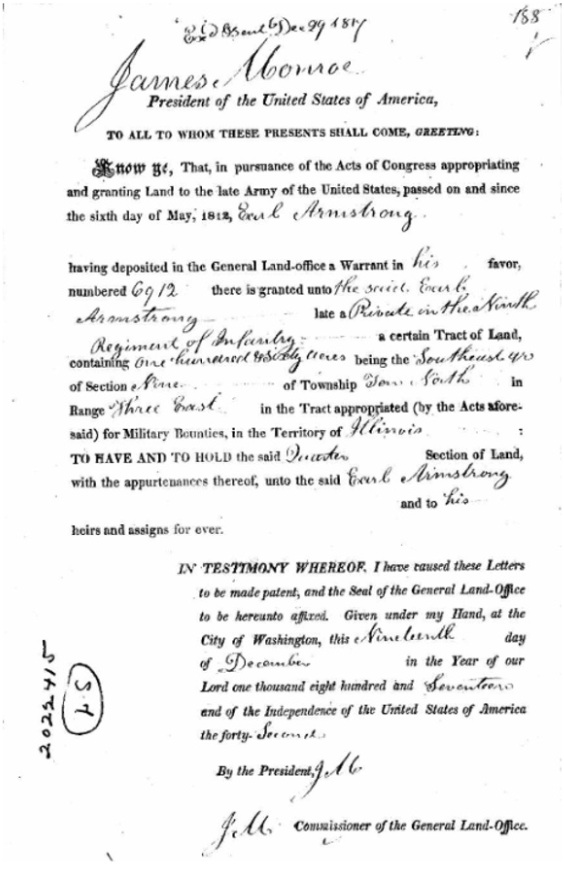
In “U.S. General Land Office Records 1776-2015,” we find the above shown federal letters patent for Earl Armstrong, granting him bounty land in Illinois on 19 Dec. 1817, in Section 9 of Township 4 South, Range 3 East of the 4th Principal Meridian, in reward for His faithful service in the 9th Regiment of Infantry (which is also the regiment listed for Earl Armstrong in the Pension Roll of 1835). Pvt. Armstrong’s bounty land was located in what is today Knox County, not in Tazewell County. That may seem to contradict the Pension Roll of 1835, which lists Armstrong as a Tazewell County resident. However, we have no evidence that Armstrong ever actually lived on his bounty land.
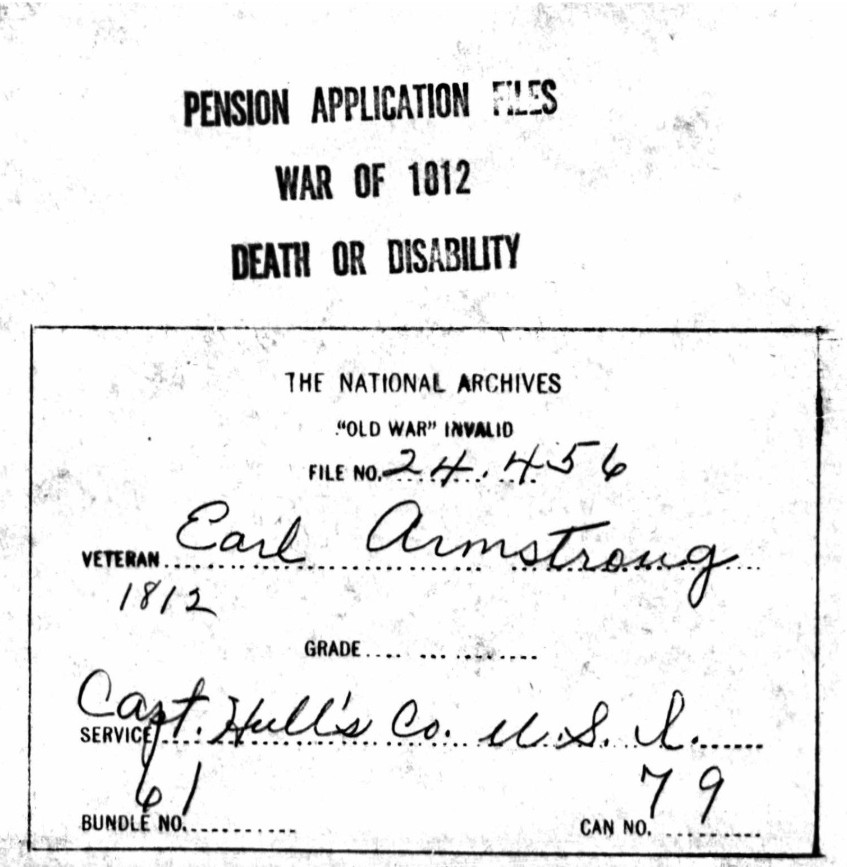
The evidence presented so far does not confirm that Armstrong lived in Tazewell County, but neither does it disprove it. However, the evidence does show that Earl Armstrong was not a Revolutionary War soldier. Rather, like James Campbell, he patriotically and honorably served and fought in the War of 1812. The U.S. Army’s 9th Infantry Regiment was raised in the State of Massachusetts and organized in March 1812, and Earl Armstrong’s pension filing explicitly tells us which war he served in:
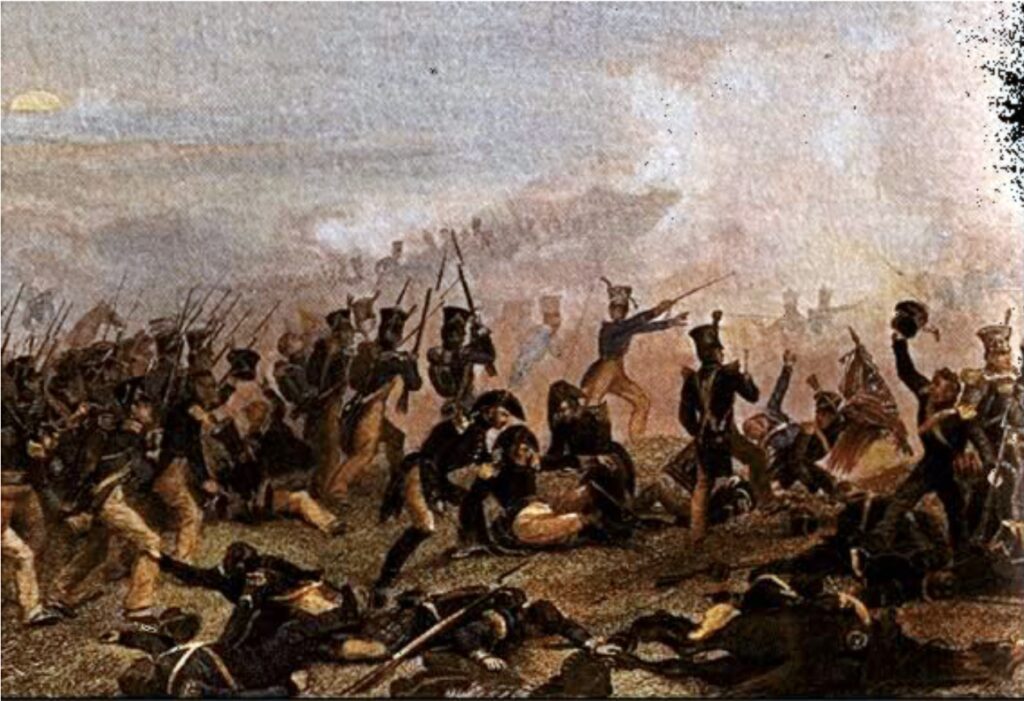
When the 9th Infantry was organized, Col. Simon Learned of Massachusetts was appointed as commander of the regiment, which took part in the War of 1812 on the U.S./Canadian border, being present at the Battle of Lundy’s Lane (Bridgewater) and other actions in that region. The 9th Infantry’s Field and Staff were:
- Capt. George Bender’s Co.
- Capt. William L. Foster’s Co.
- Capt. Abraham Fuller Hull’s Co.
- Capt. Chester Lyman’s Co.
- Capt. James F. Norris’s Co.
Capt. Abraham Fuller Hull, Pvt. Earl Armstrong’s commander, was killed at Lundy’s Lane on 25 July 1814. Lundy’s Lane started well for the U.S., but the tide of the battle turned against U.S. forces following the British counterattack, and ended as a strategic defeat of the United States. The Americans on the Niagara suffered so many casualties that they had to fall back to Fort Erie, losing the initiative on the Niagara Peninsula.
The Americans captured 19 British officers and 150 other ranks, and the British suffered 84 killed, 559 wounded, 169 captured, and 55 missing. In contrast, the Americans suffered 171 dead, 570 wounded, and 117 missing. Four American officers and 75 Americans of other ranks captured at Lundy’s Lane were imprisoned at Quebec and Halifax in the autumn of 1814.
Among the American P.O.W.s held in Halifax was Pvt. Earl Armstrong.
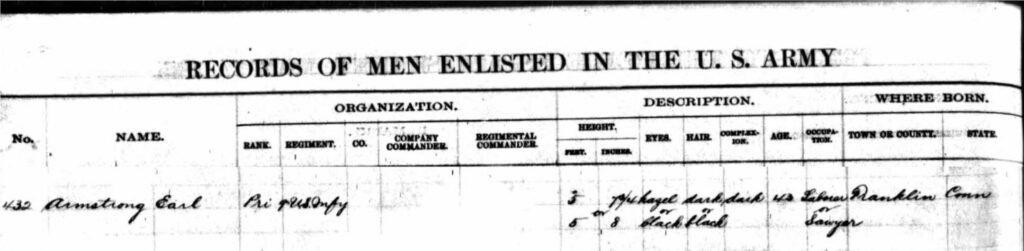
U.S. Army records from this period list Earl Armstrong as an Army soldier, and provide many interesting personal details about him and his service record. According to those records, Armstrong was a laborer or sawyer from the State of Connecticut, with hazel eyes, dark or black hair, and a darker complexion.
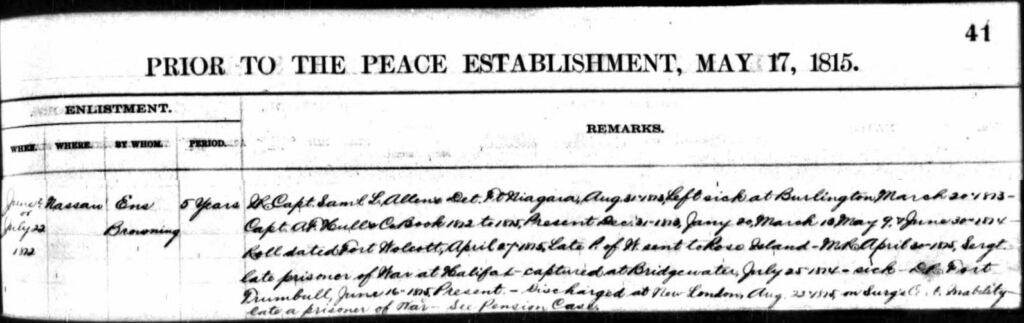
In addition to U.S. Army records, Armstrong’s status as a P.O.W. in Canada is further documented by a British Canadian roll of prisoners of war:
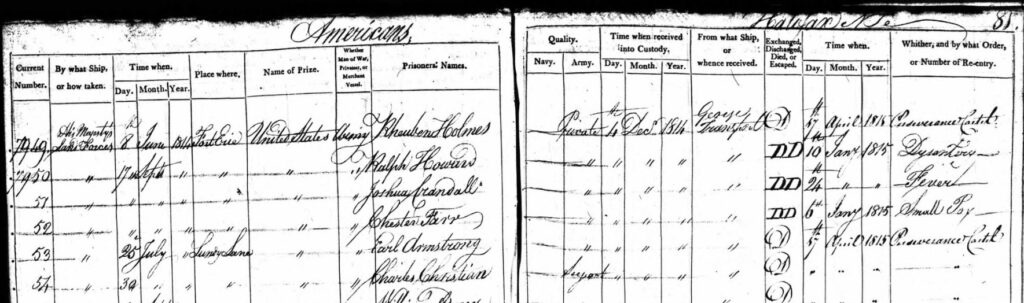
Further genealogical research reveals that Earl Armstrong was born 1 Sept. 1772 in Franklin, Connecticut, a son of Daniel Armstrong Jr. and Dorcas (King) Armstrong. The 1802 and 1804 tax rolls show him in Litchfield, Herkimer County, New York. The 1810 U.S. Census, in a record dated 6 Aug. 1810, shows Earl Armstrong as a resident of Lisbon, St. Lawrence County, New York. At that time, the Earl Armstrong household included five souls:
- Free White Persons – Males – Under 10: 1
- Free White Persons – Males – 16 thru 25: 1
- Free White Persons – Males – 26 thru 44: 1
- Free White Persons – Females – Under 10: 1
- Free White Persons – Females – 26 thru 44: 1
- Number of Household Members Under 16: 2
- Number of Household Members Over 25: 2
- Number of Household Members: 5
Earl’s first wife was Mary Ann Bishop (1783-post 1870), daughter of Asa and Rebecca (Winchell) Bishop. They had three children: Sophia (1800-1843), David (1812-1909), and Diantha (1815-1903). The children of Earl and Mary Ann have living descendants.
As we saw above, after he was released by the British, Earl Armstrong was awarded bounty land in Illinois for his military service. He moved to Illinois, presumably inspected his bounty land, but finally settled in the area of Lewistown in Fulton County, Illinois. During those years, Earl’s marriage to Mary Ann ended (it appears that Mary Ann and his children did not accompany him to Illinois), and he remarried on 22 March 1827 in Fulton County to Sally Vandike.
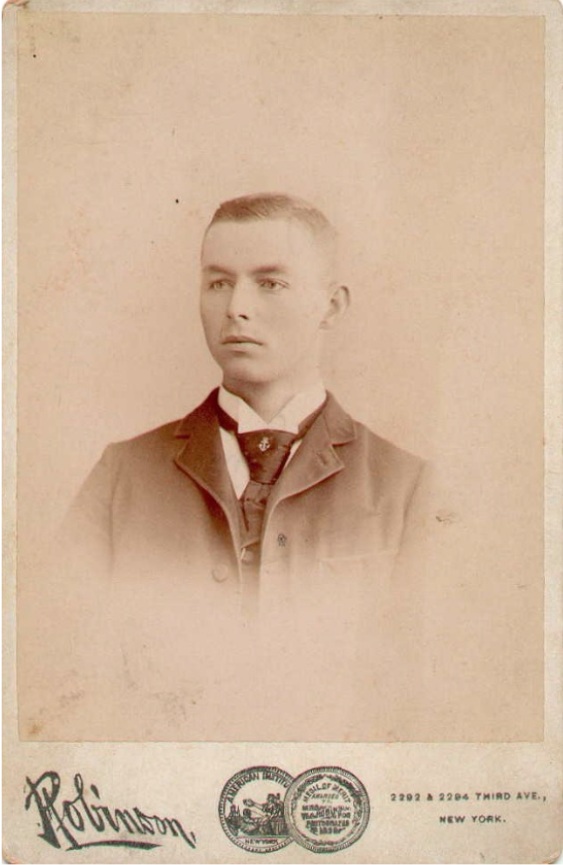
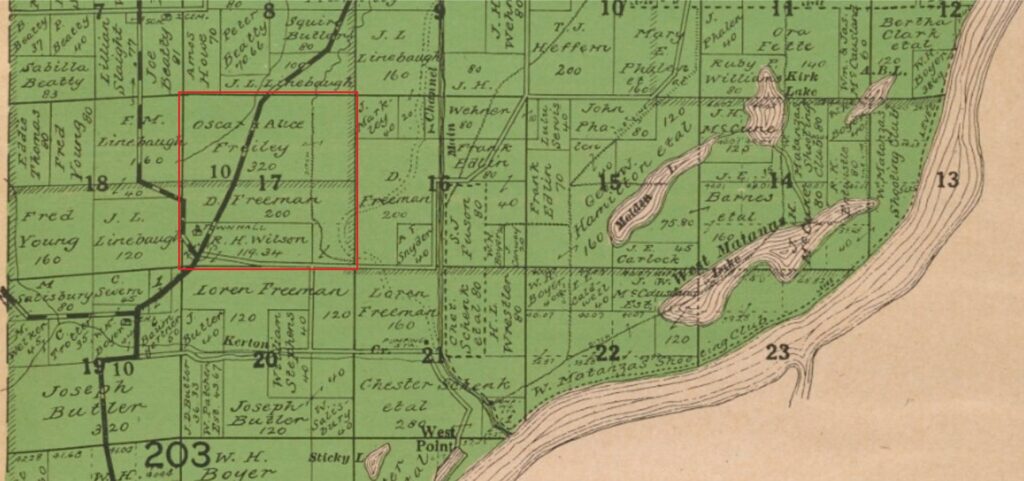
At the time of his death, Armstrong owned land in Fulton County located in Section 17 of Kerton Township — Township 3 North, Range 3 East of the 4th Principal Meridian. The land was along present-day Route 100, north of Marbletown, to the southwest of Emiquon and Havana.
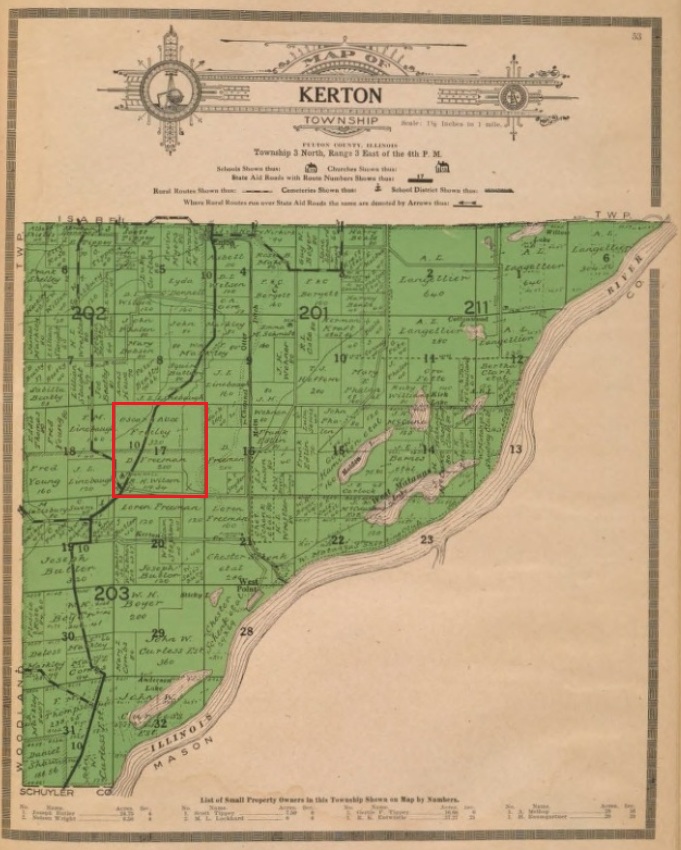
plats of all townships with owners names – published by
Fulton County News, Lewiston, Illinois (1916). Armstrong owned land in Section 17, indicated in red.
Following his discharge from the U.S. Army, Earl Armstrong filed for a military pension while living in New York State. All pensions granted to veterans of the War of 1812 and their surviving dependents before 1871 were based exclusively on service-connected death or disability. The pension provisions already in existence for veterans of the regular and volunteer forces were applied to veterans of the War of 1812 and to their surviving dependents by the Congressional Acts of 29 Jan. 1813 (2 Stat. 794), and 16 April 1816 (3 Stat. 285). Other similar or supplementary acts providing benefits on account of death or disability were passed by Congress between 1813 and 1871.
While we are able to discover a great deal of information about Pvt. Armstrong even apart from his pension file, that file contains a wealth of information about him, his service, and his move to Central Illinois.
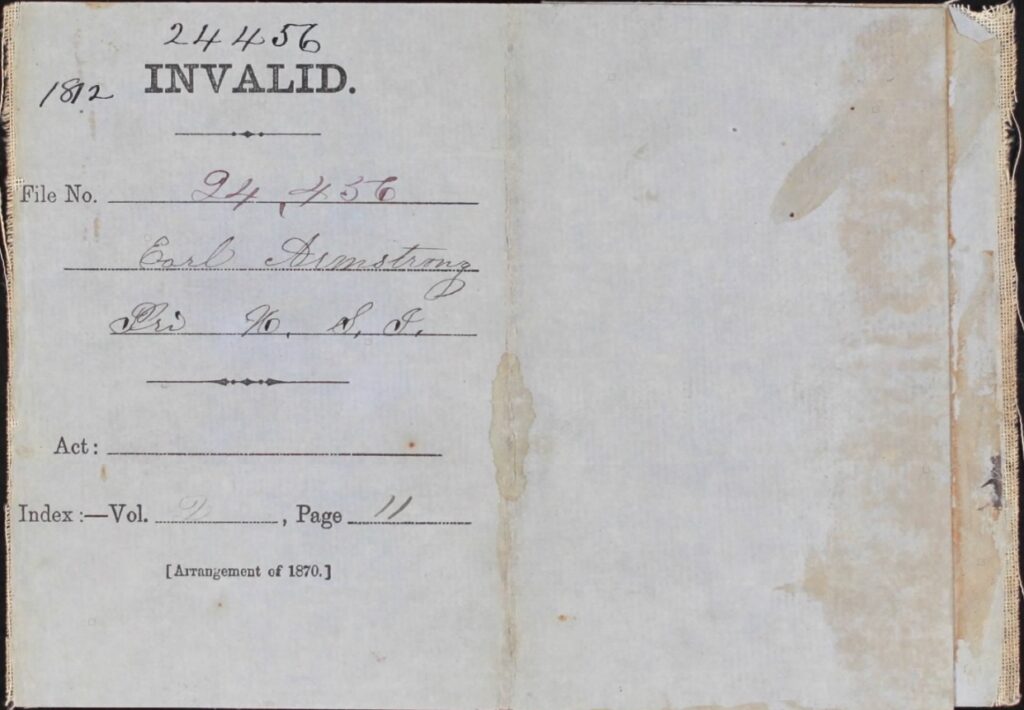
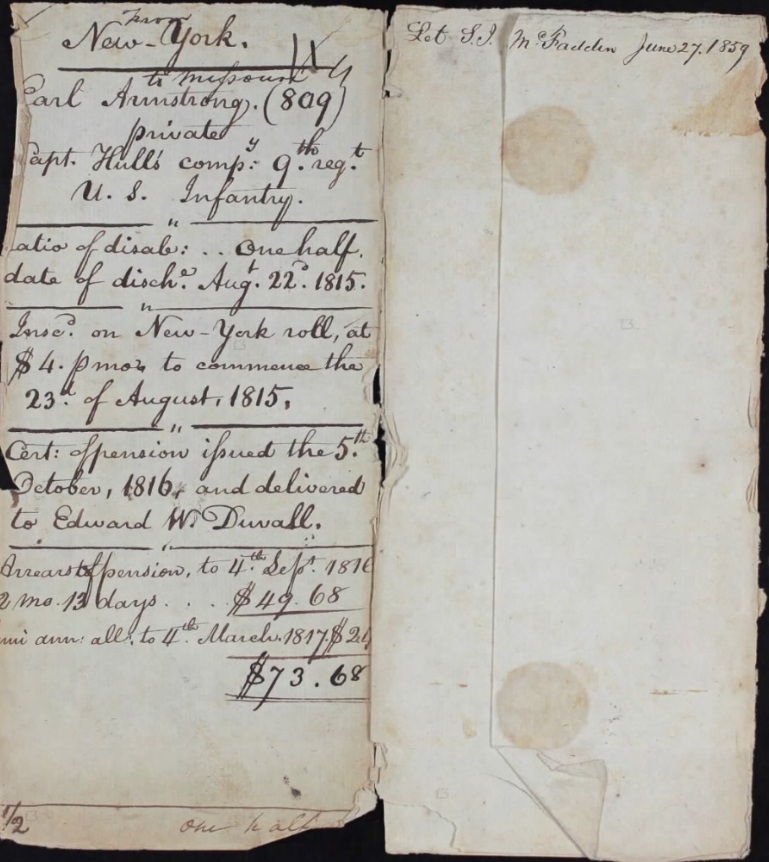
Following below are the three key pages of Earl Armstrong’s War of 1812 pension file, confirming his military service, the permanent leg injury that he suffered at Lundy’s Lane (Bridgewater), and giving directions for the transfer of his pension payments from New York to Missouri. At the time of the payment transfer, Armstrong said he was living on the Illinois River. He presumably had business that would take him downriver to Missouri, where he could pick up his pension payments presumably in St. Louis. In those early pioneer times, it probably would have been more difficult to send his money not only up the Mississippi but even further up the Illinois.
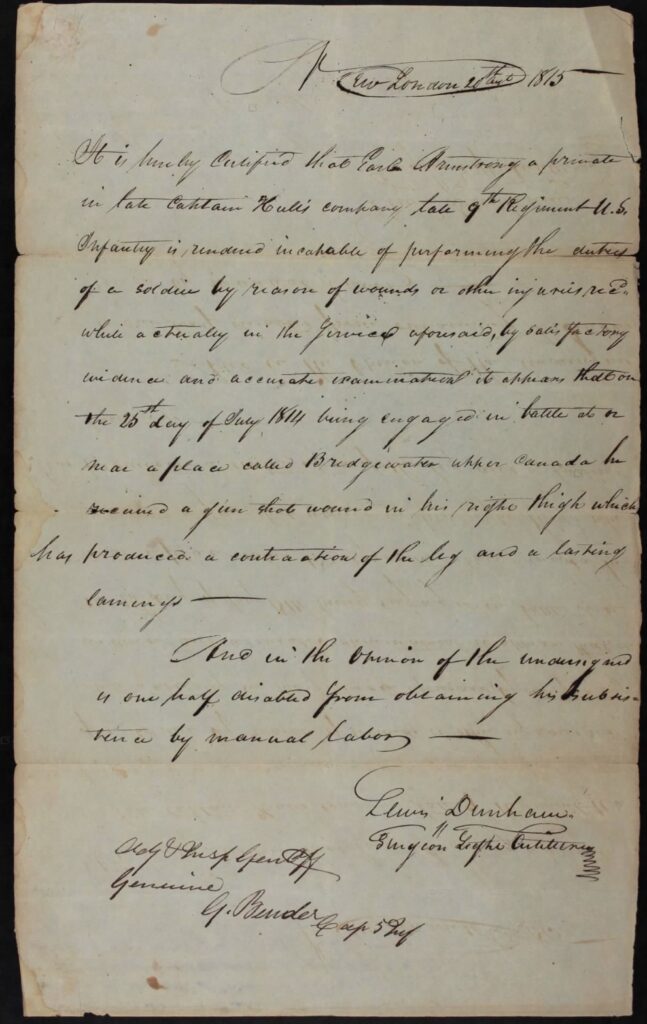
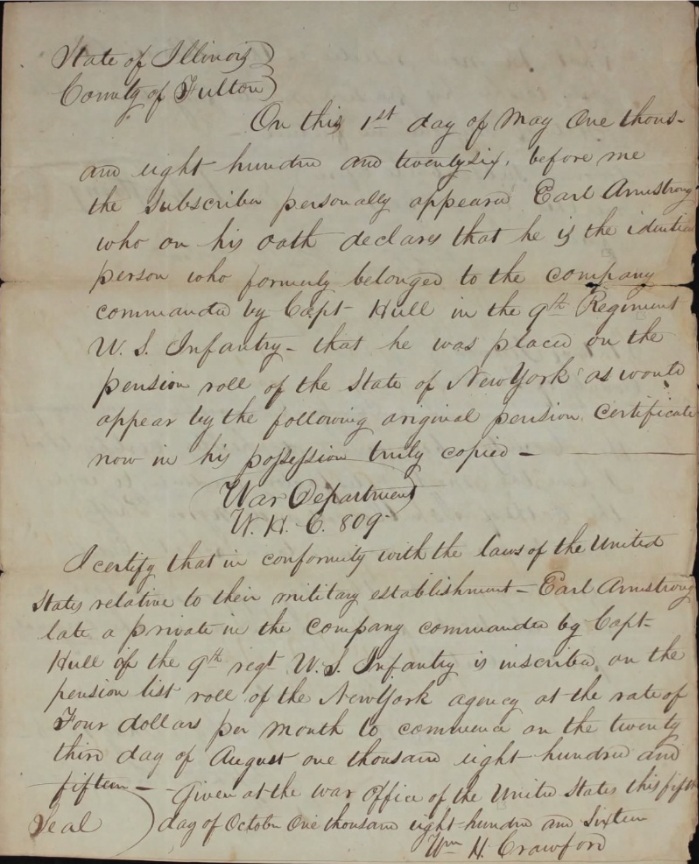
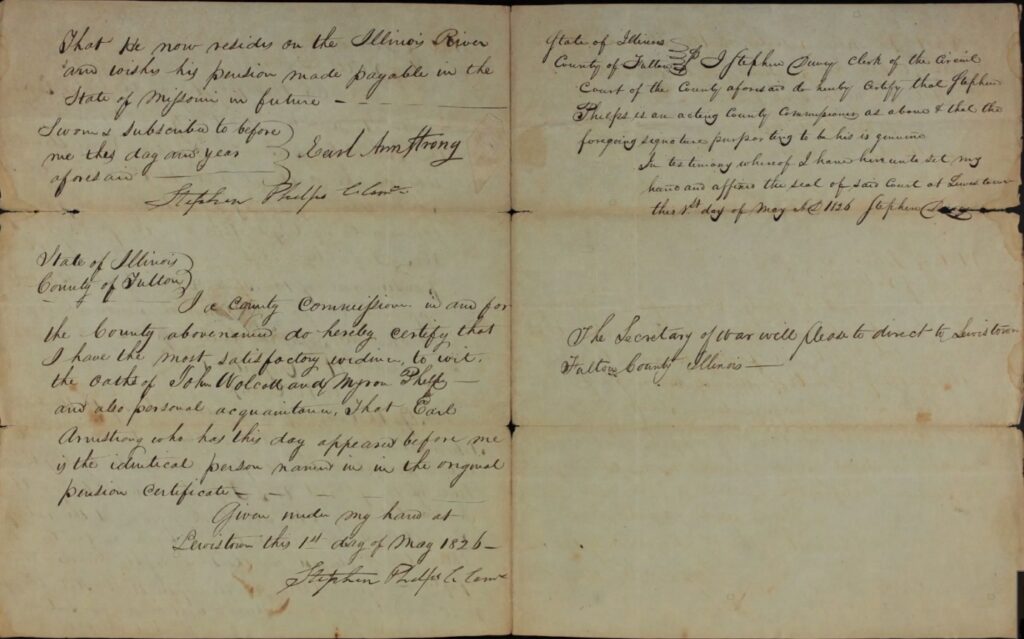
Here follows a general summary of Earl Armstrong’s pension file, including a reiteration of some of the facts related above:
1. Earl Armstrong served in the War of 1812 in Capt. Hull’s Co., the 9th U.S. Infantry. On 25 July 1814 he was wounded in battle at Bridgewater in Canada. The wound to his thigh caused a contraction of his leg, and he was deemed to be half incapacitated, therefore receiving a pension of $4 per month, as was recorded in New London, Connecticut, on 20 Aug. 1815.
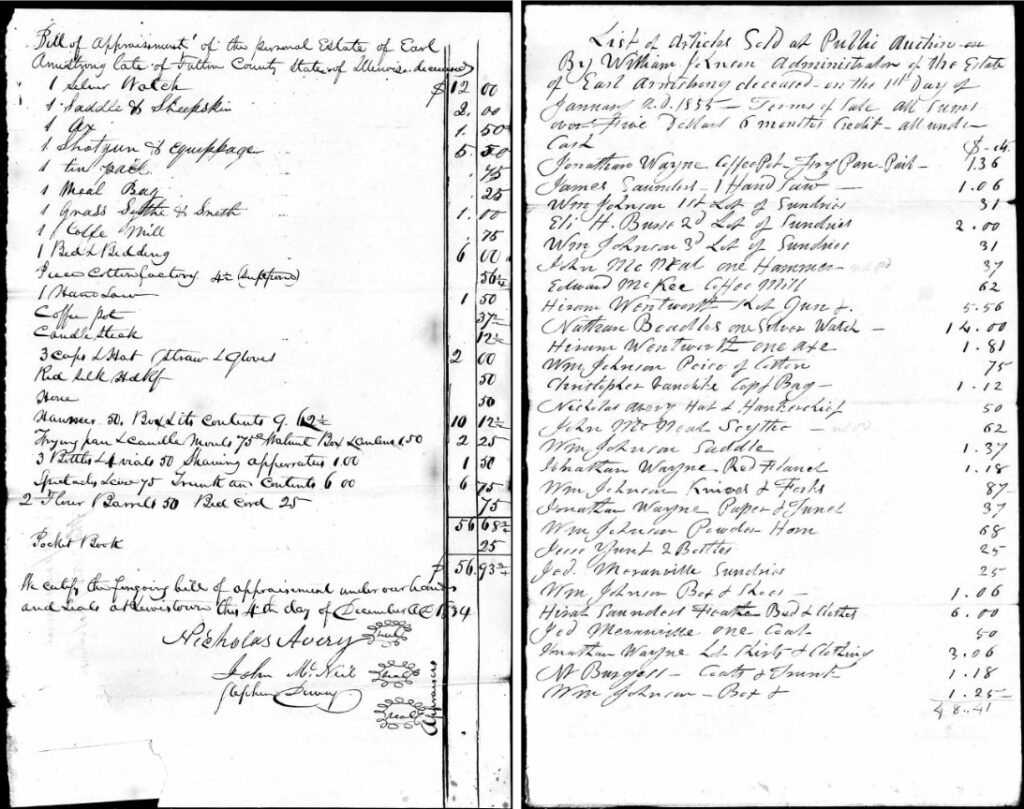
2. On 1 May 1826 Earl appeared at Fulton County, Illinois, to request payments for his pension. It was stated that he then resided on the Illinois River, and wished his pension to be paid out in Missouri from now on. Pension rolls show that he drew his pension through Sept. 1834. (After his death, his personal belongings from his estate were sold at auction on 1 Jan. 1835.)
3. The only other contents of the pension file are two letters from S. D. McFadden, written in 1859, from Henry, Illinois. In the letters, McFadden he sought the address of Earl Armstrong in the years 1848-49. In the second letter he mentioned Earl Armstrong’s War of 1812 bounty land, and said he was seeking Armstrong or his heirs “for the purpose of making some arrangements with him or them in relation to said land.” As we have seen, Armstrong was granted 160 acres, with the grant recorded in Knox County, Illinois. There is no mention of whether the Commissioner of Pensions replied to these letters from McFadden.
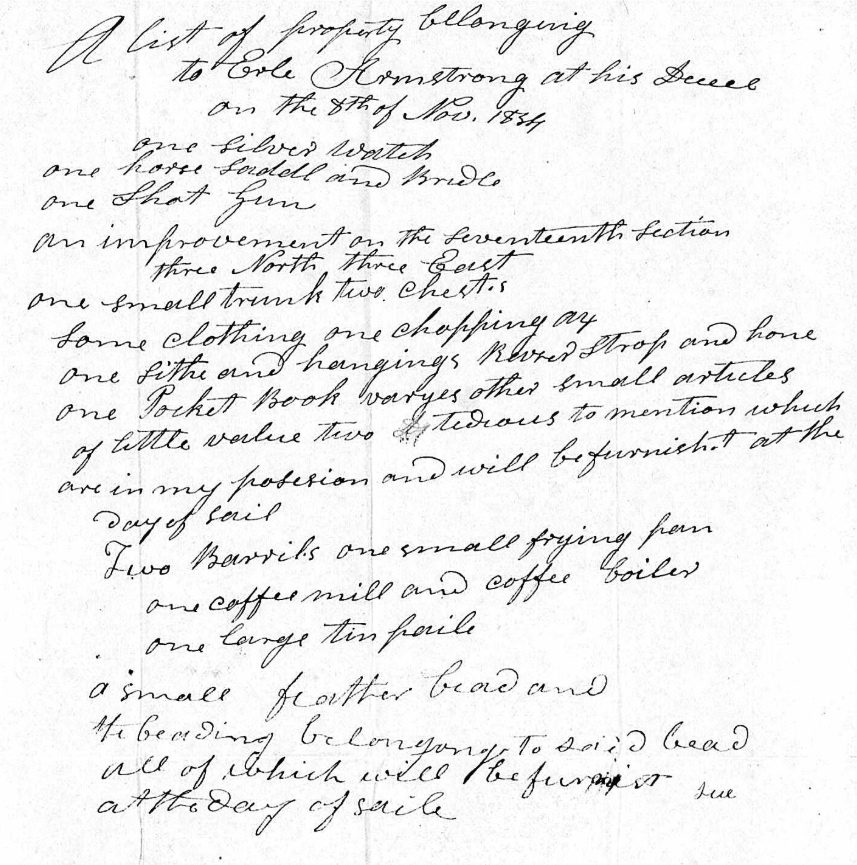
The final set of documents that tells us about Pvt. Earl Armstrong are those in his Fulton County probate file, which tells of his final days and of the disposition of his estate. Armstrong fell sick and died in the autumn of 1834. A man named E. D. Rice tended to him in his final sickness. Earl Armstrong died intestate (without a will), and his widow Sally said her health prevented her from serving as administratrix of the estate, so William Johnson was appointed administrator with her approval.
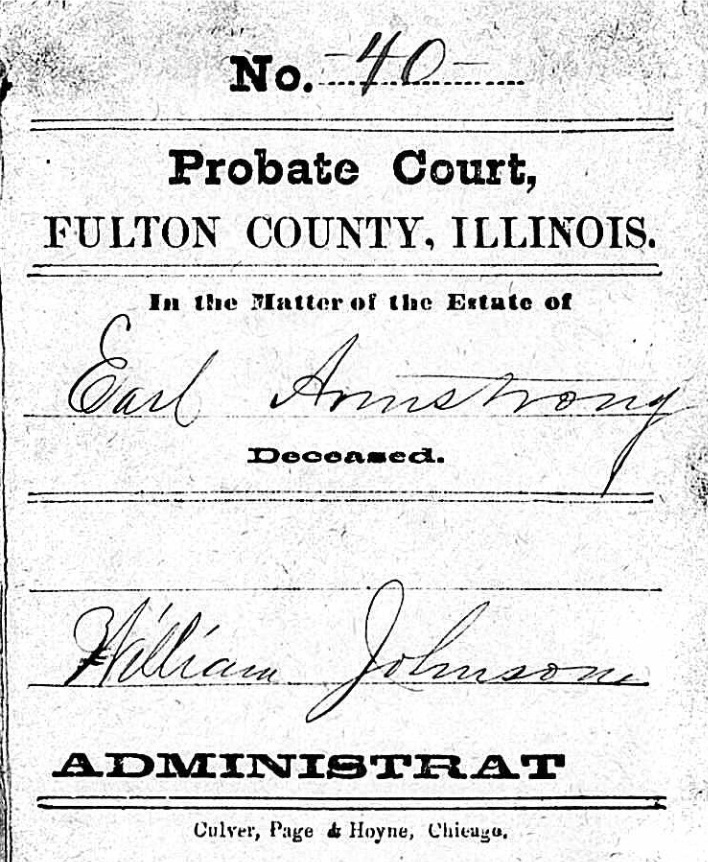
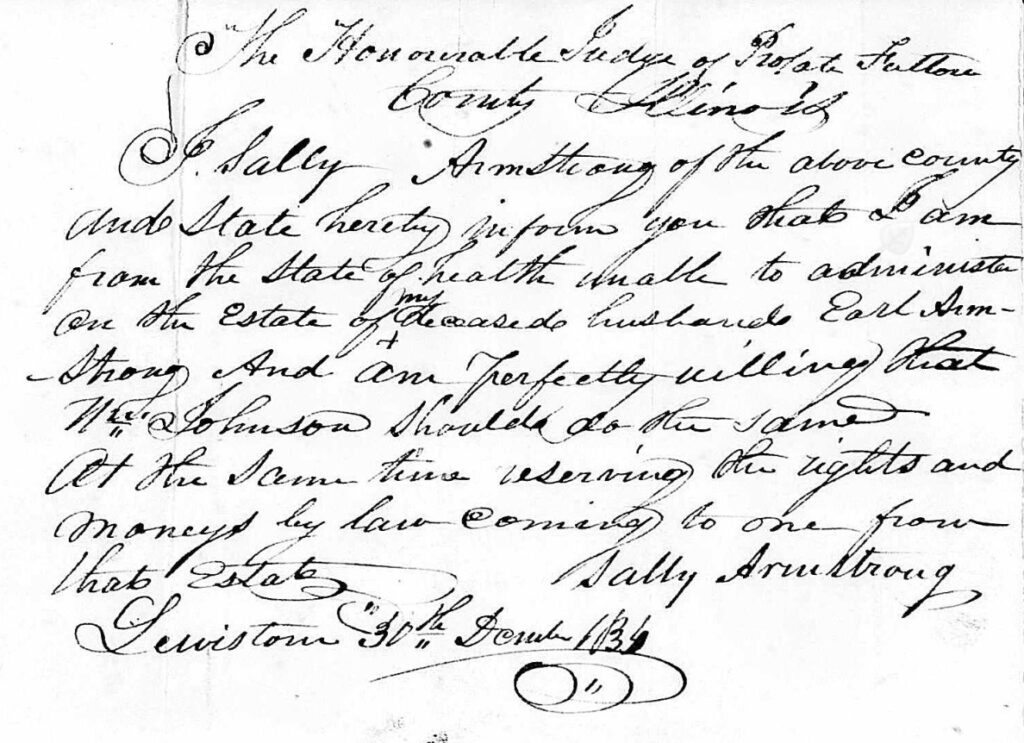
One of Earl Armstrong’s outstanding bills in the probate file for claims against his estate is dated 1 Sept. 1834, while the file’s list of his property seems to indicate he died 8 Nov. 1834 — in any event, he certainly died at some point after 1 Sept. 1834 and no later than 8 Nov. Appraisers of his estate were appointed 9 Nov. 1834, and William Johnson was bonded for $300 as administrator on 29 Nov. 1834. The estate auction took place 1 Jan. 1835, and claims against his estate continued to be submitted throughout 1835. His first wife Mary Ann and his three children are not mentioned in the probate file — as noted above, they were living in New York.
Below are a few more documents from Armstrong’s extensive probate file.
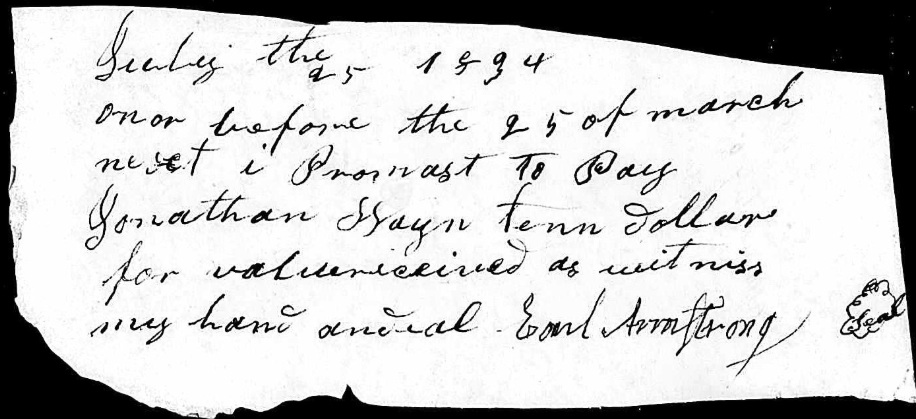
We may conclude this investigation with the affirmation that Earl Armstrong (1772-1834) bravely served his country during the War of 1812, was granted bounty land in Knox County, Illinois, and settled in Fulton County, Illinois, where he remained for the rest of his life. He is no doubt buried somewhere in Fulton County, perhaps in or near Lewistown, or maybe on the land he owned in Section 17 of Kerton Township.
One thing we cannot affirm, however, is that he was ever a Tazewell County resident. It is only the Pension Roll of 1835 that places Armstrong in Tazewell County. Did he ever live here, or rather did he merely come to Tazewell County occasionally, perhaps to hunt, or for the purposes of business, or for legal matters pertaining to his pension? We must leave those questions unanswered.