
For Tazewell County, the Juneteenth holiday during the American Semiquincentennial year of 2026 was not merely an occasion to recall the moment 161 years ago when the Emancipation Proclamation began to be enforced in Texas, the final stronghold of slavery in the U.S. after the end of the Civil War in 1865. It also marked the bicentennial of the Shipman family “Freedom Pursuit” and the valiant ride of three of Tazewell County’s early abolitionists to rescue a family of free blacks who had been kidnapped.
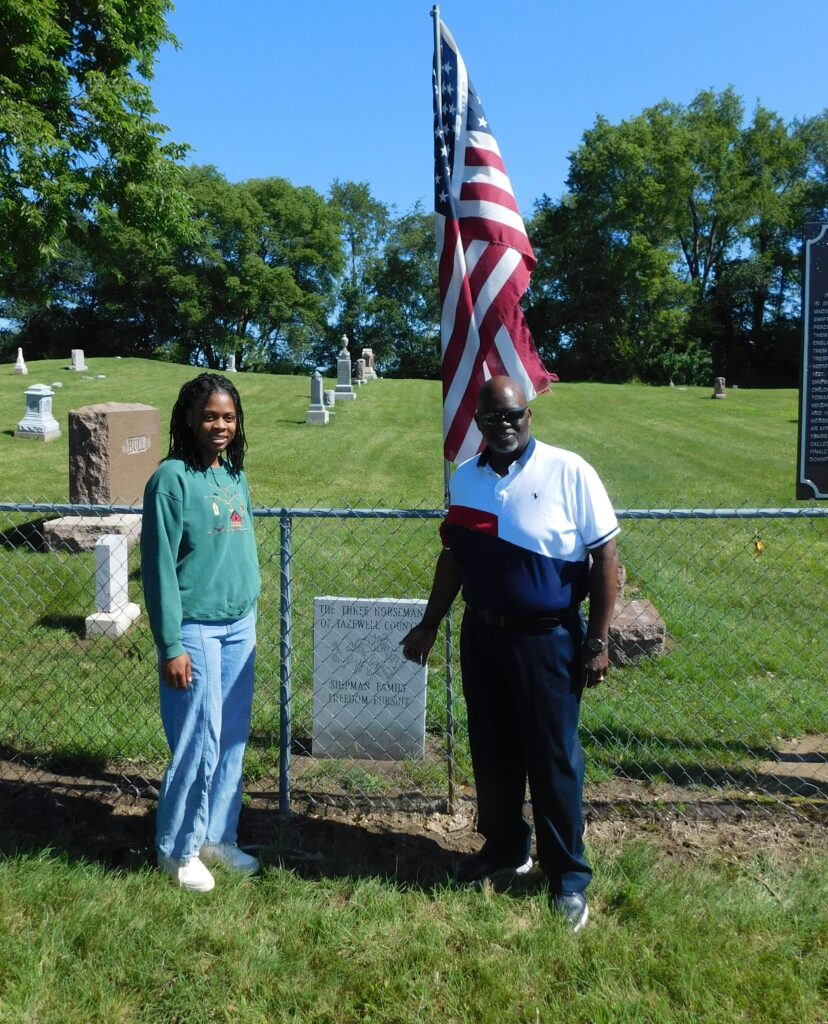
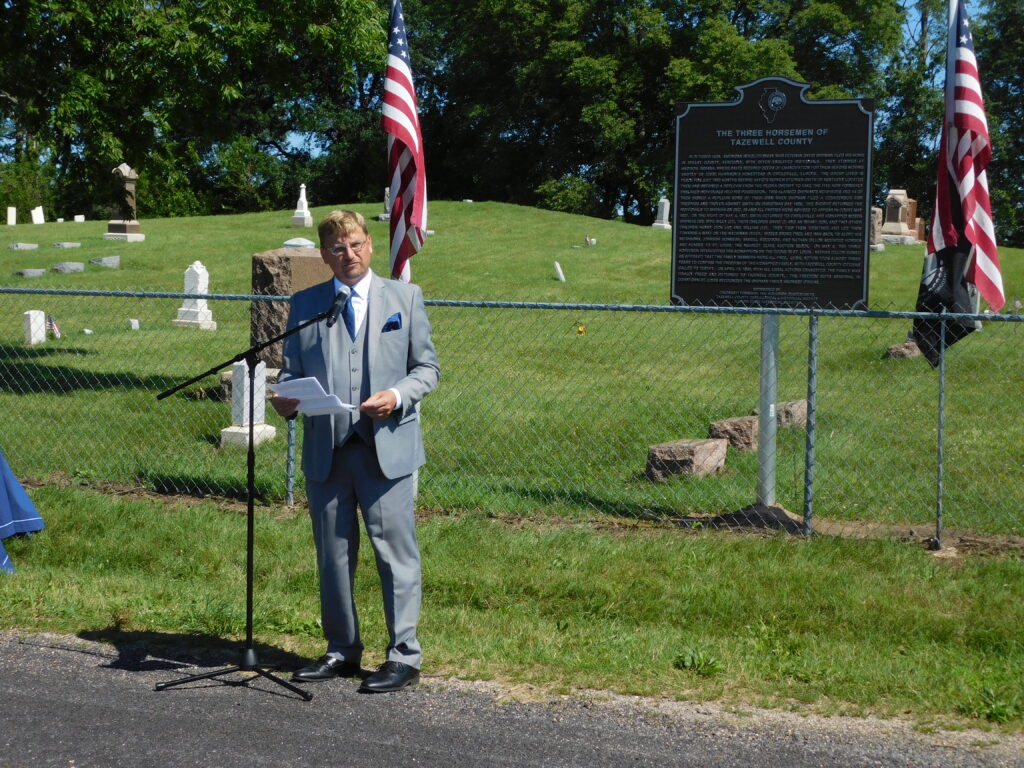
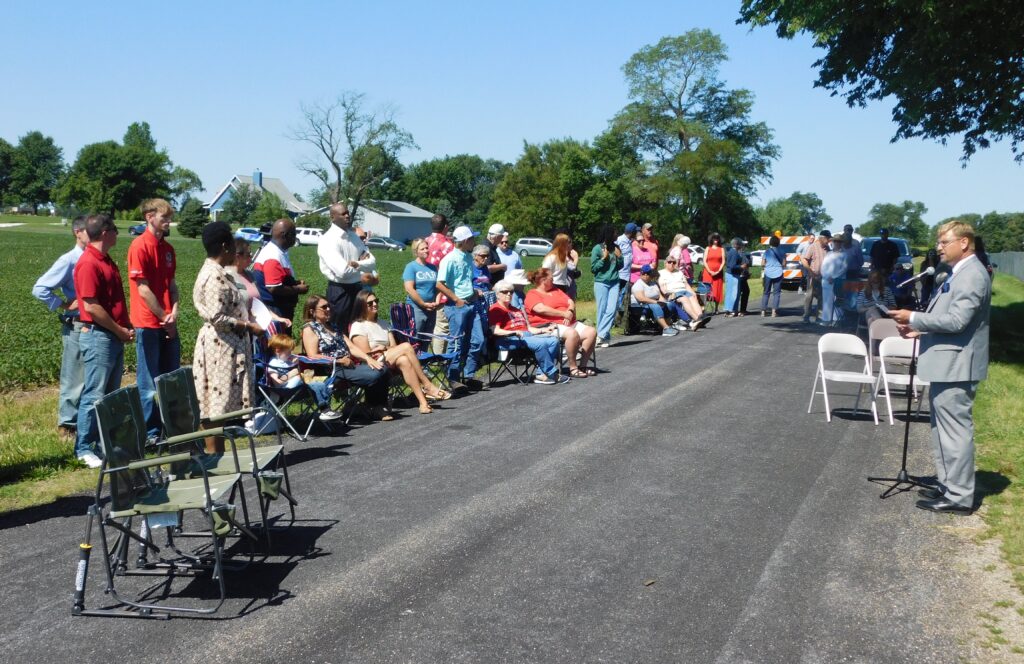
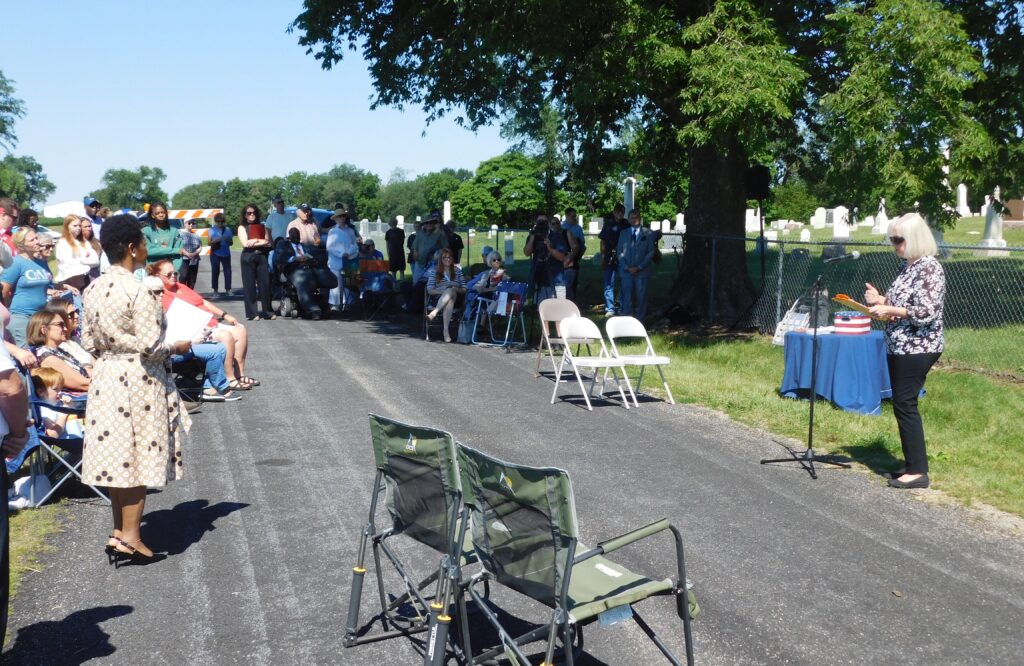
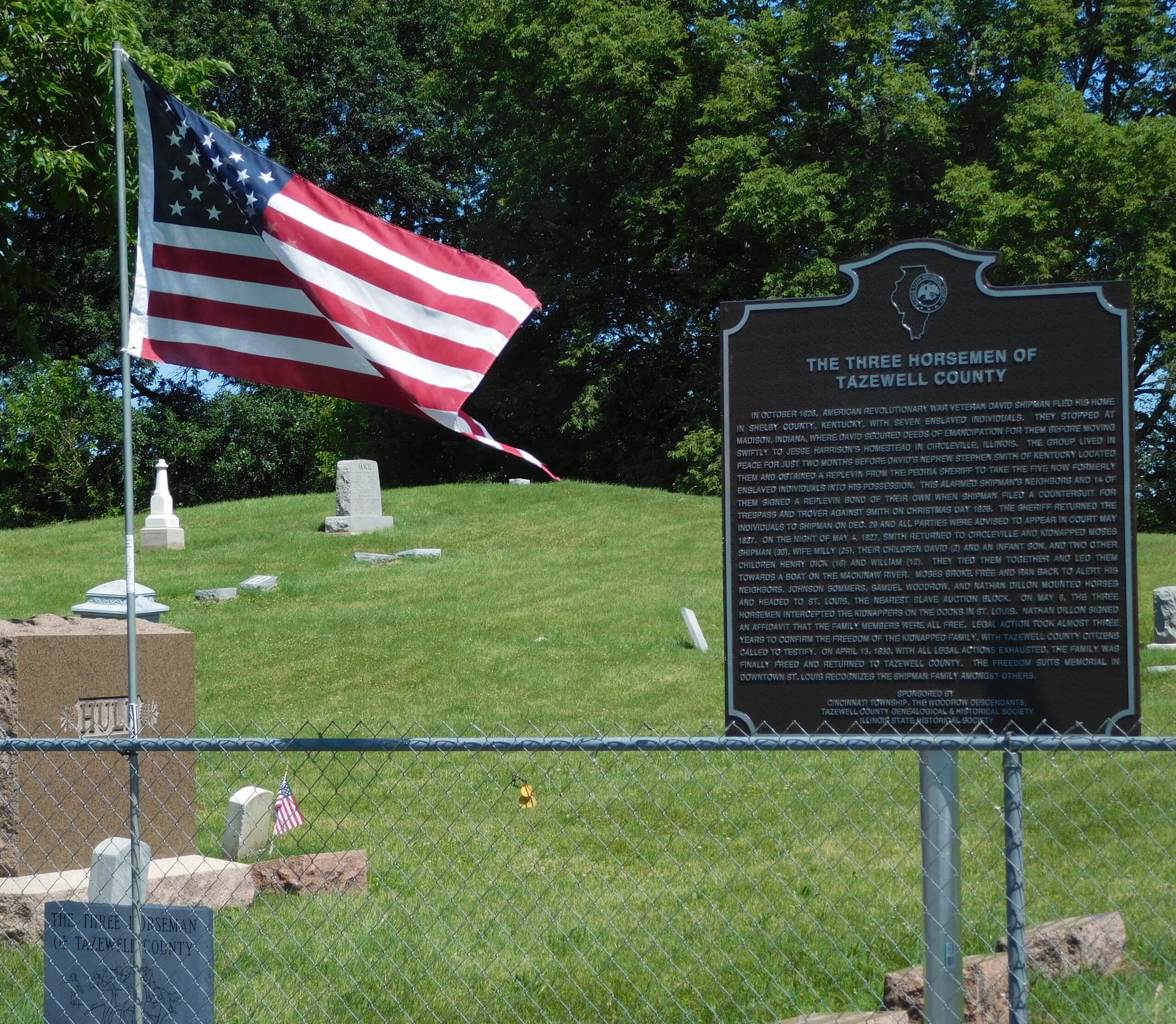
To honor and commemorate that event two centuries ago, last Friday morning a diverse crowd of approximately 85 people gathered at Woodrow Cemetery a mile east of South Pekin for a Juneteenth observance in which a new stone monument and a new Illinois State Historical Society marker were formally dedicated. The monument and marker are inscribed to “The Three Horsemen of Tazewell County,” with a subtitle of “Shipman Family Freedom Pursuit” inscribed on the monument. The monument, adorned with a drawing of the three horsemen created by Adriana Weaver, a Pekin Community High School student, was sponsored by the Peoria Branch National Association for the Advancement of Colored People and Abel Vault & Monument of Pekin. The marker was sponsored by the Tazewell County Genealogical & Historical Society, the Illinois State Historical Society, Cincinnati Township, and the descendants of the Woodrow family, all of whom were represented at last week’s Juneteenth observance, with the artist Weaver also in attendance.
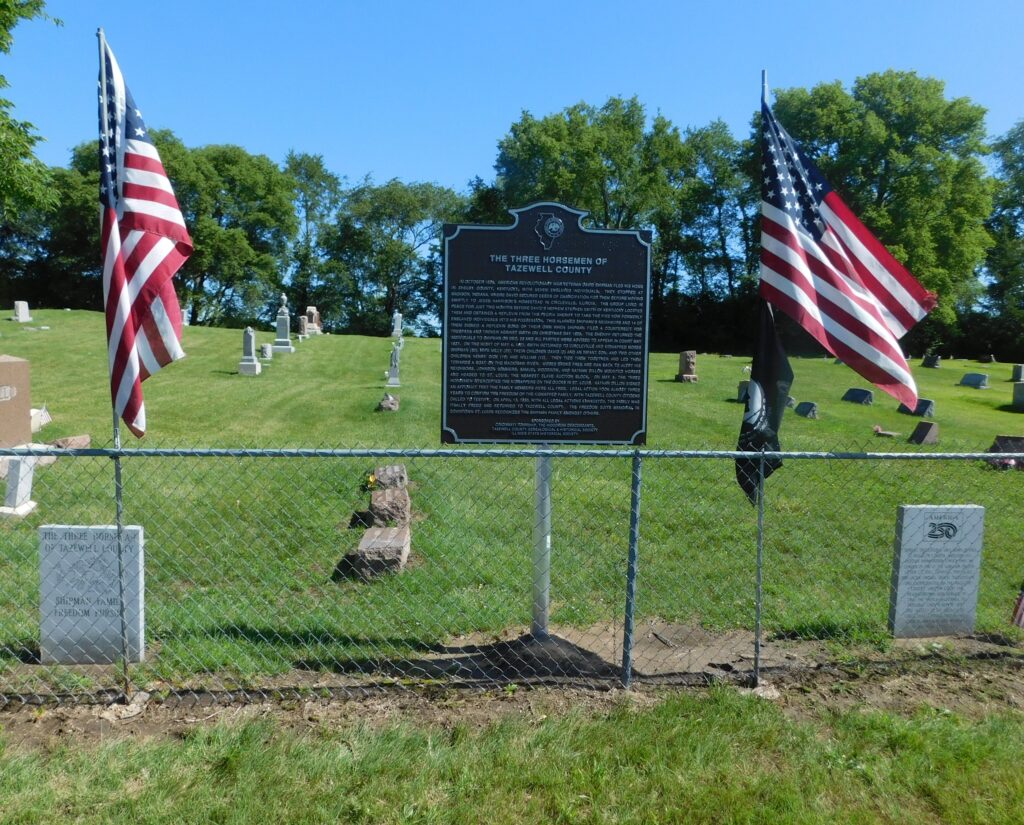
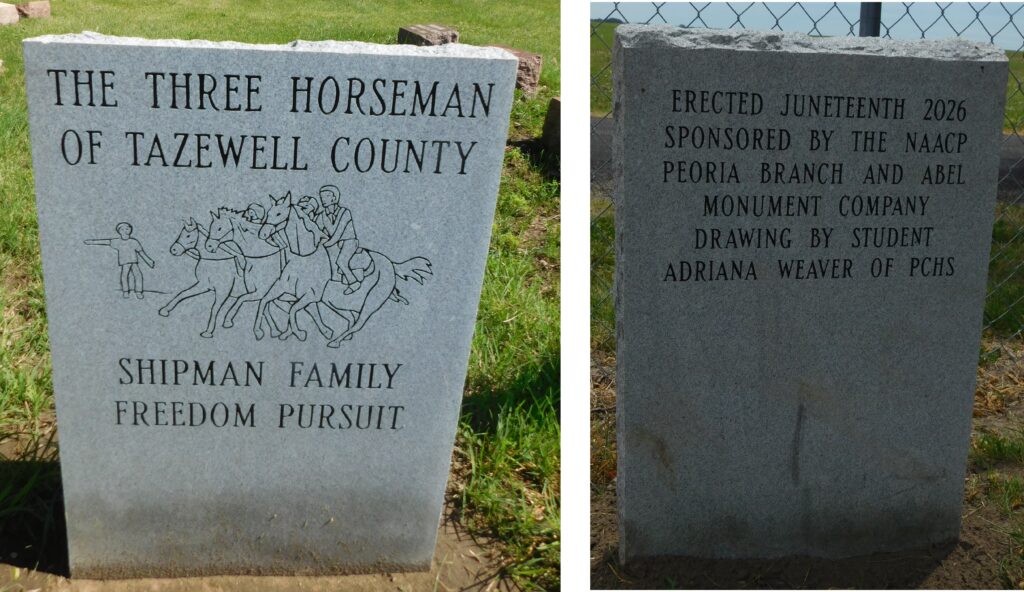
The story of the “Freedom Pursuit” and the “Three Horsemen” is one that we have recalled several times here at “From the History Room” — first in September 2013, again in January 2016, and most fully in July 2022. In published sources of our local history, it first appears in Charles C. Chapman’s 1879 Tazewell County history. However, more recent research by Susan Rynerson of the Tazewell County Genealogical & Historical Society has revealed the full story (and also has shown that the 1879 Chapman account is not only incomplete but includes errors and some unsubstantiated or exaggerated details).
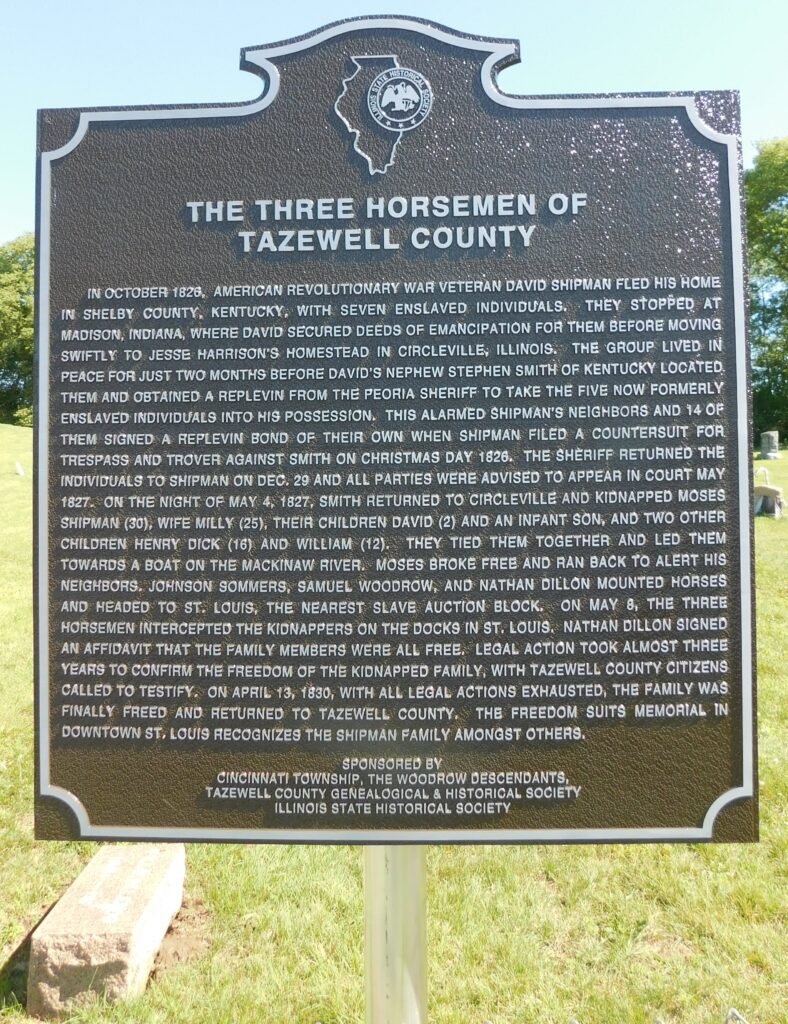
The account of the “Freedom Pursuit” now inscribed on the new State Historical Marker at Woodrow Cemetery was written by Rynerson. Following is the narrative from the historical marker, which I have expanded with various additional details from Rynerson’s research than could fit on the marker:
In the mid-1820s, American Revolutionary War veteran David Shipman (c.1760-1845) mortgaged all of his property in order to purchase nine black enslaved persons, possibly with the intention of enabling them to obtain their freedom. In 1826, however, two of them, Sarah and Eliza, were seized from him and sold due to his debts. Therefore, in October 1826, David Shipman fled his home in Shelby County, Kentucky, with the seven remaining enslaved blacks named Moses and Milly Shipman, their children Allen, Mary Ann, and David, and two others named Henry Dick and William. Crossing the Ohio River, they stopped at Madison, Indiana, where David immediately secured deeds of emancipation for them before moving swiftly to the homestead of Jesse Harrison (with whom Shipman had served during the Revolution), located where the town of Circleville would later be established at the northeast corner of Sand Prairie Township in Tazewell County. (Woodrow Cemetery is just to the north of where Harrison and Shipman lived.)
Shipman, his wife, and the now free blacks lived in peace for just two months before David’s nephew Stephen Smith of Kentucky located them and obtained a Replevin from the Peoria County Sheriff to take the free black individuals into his possession. This alarmed Shipman’s neighbors, and 14 of them signed a Replevin bond of their own when Shipman filed a countersuit for Trespass and Trover against Smith on Christmas Day 1826. Ironically, on this occasion, to obtain the release of the free blacks, Shipman had to argue that Smith had taken his “property” even though they all had manumission papers from Indiana. The sheriff returned the free blacks to Shipman on Dec. 29, and all parties were advised to appear in court in May of 1827.
However, rather than appear in court, on the night of 4 May 1827, Smith and returned to Circleville and kidnapped Moses Shipman, age 30, Moses’ wife Milly, age 25, their children David, age 2, and Charles, an infant, along with Henry Dick, and 16, and William, age 12. The kidnappers tied them together and led them towards their boat on the Mackinaw River, but Moses was able to break free and run back to alert his neighbors.
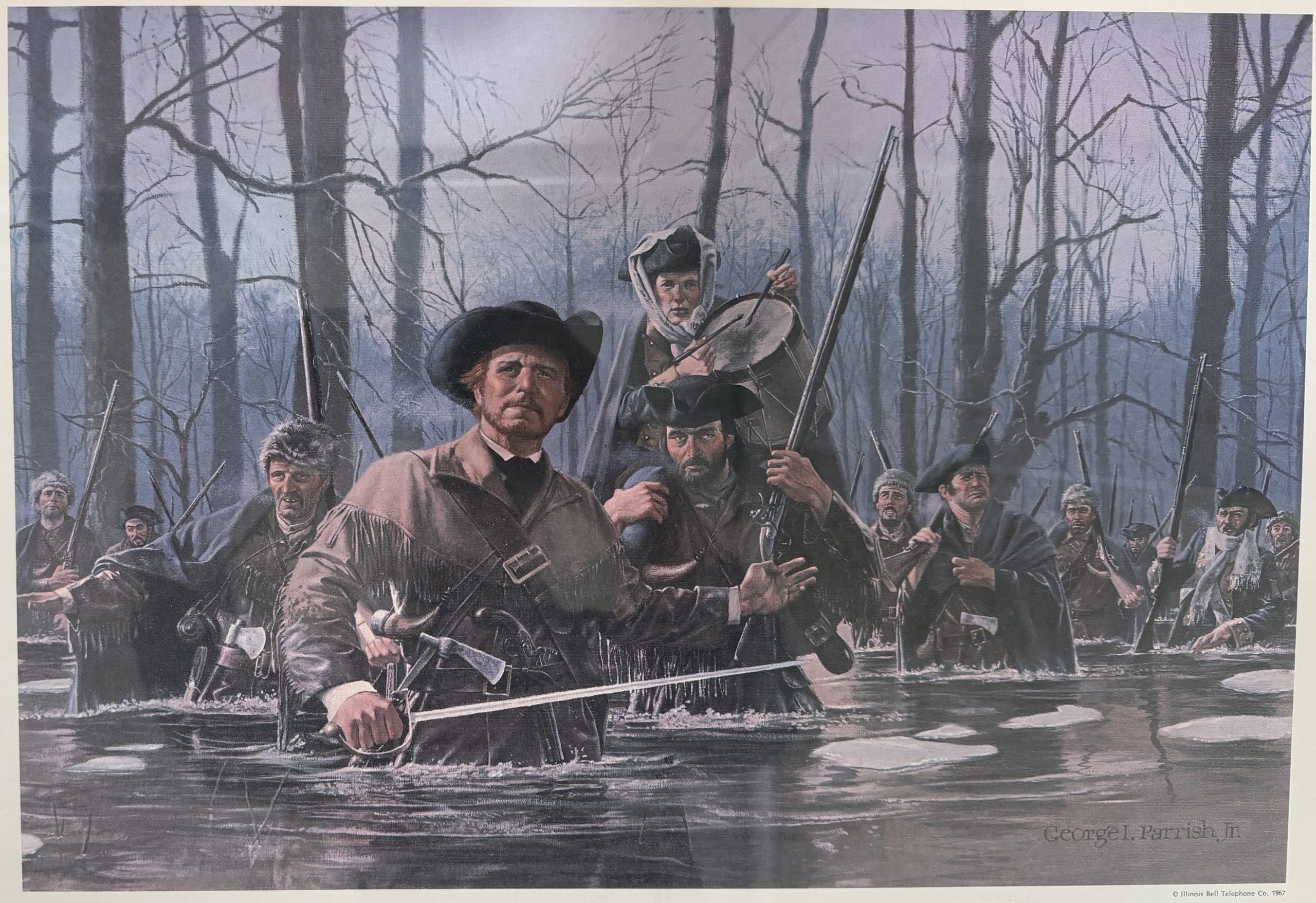
His neighbors quickly sprang to action. That very night, Johnson “John” Sommers (1792-1870), Samuel Woodrow (1798-1874), and Nathan Dillon (1793-1868) mounted horses and swiftly headed to St. Louis, the nearest slave auction block. On May 8, the three horsemen intercepted the kidnappers on the docks at St. Louis. Dillon signed an affidavit that the family members were all free, and he and his friends helped Milly, David, Henry, and William file Freedom Suits in St. Louis court, insisting that their being free citizens meant they could not be sold back into slavery.
Legal action in their cases took almost three years before their freedom was upheld, during which time Milly, David, Charles, Henry, and William had to be held in jail to prevent them from being “sold down the river” to Louisiana. At first the St. Louis court ruled in favor of Stephen Smith, claiming that because David Shipman was in debt to his nephew, Shipman should have let Smith take the enslaved individuals rather than setting them free. However, the Missouri Supreme Court in those days had a rule known as “once free, always free,” so the Supreme Court overturned the lower court rulings, confirming the freedom of the kidnapped family, with Tazewell County citizens having been called to testify. At long last, on 13 April 1830, with all legal actions exhausted, the family was finally freed and returned to Tazewell County.
The new “Three Horsemen of Tazewell County” memorial was placed at Woodrow Cemetery because both Samuel Woodrow and Johnson Sommers (whose first wife Amelia was a Woodrow) are buried there. Nathan Dillon is buried at Dillon Cemetery.
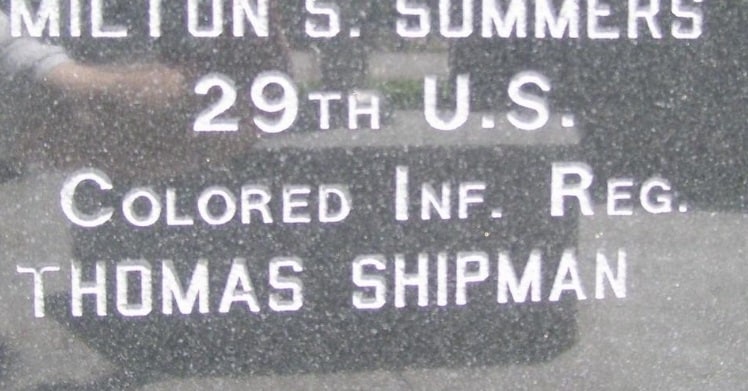
Significantly, the family of Moses and Milly Shipman has connections to the first Juneteenth in 1865. Their daughter Mary Ann was the mother of Pvt. George W. Lee of Pekin, who served in the 55th Massachusetts Colored Infantry during the Civil War and was present at Juneteenth — and George himself was a son-in-law of Nance (Legins) Costley of Pekin. In addition, Moses and Milly’s son David married Elizabeth Ashby, who was very probably a sister of Pvt. Nathan Ashby of Pekin and Peoria, a soldier in the 29th U.S. Colored Infantry who also was at Juneteenth (and a few of Nathan’s brothers and close Ashby kin were also at Juneteenth). Another son of Moses and Milly, Pvt. Thomas Shipman (c.1841-1865), was a sharpshooter in the 29th U.S. Colored Infantry, but was fell to a Confederate sniper’s bullet one week before Lee’s surrender at Appomattox Courthouse and so didn’t make it to Juneteenth that summer. On the Tazewell County Veterans Memorial outside the Tazewell County Courthouse, Thomas Shipman’s name is listed immediately below his fellow fallen Civil War soldier Lieut. Milton Stanford Sommers (1826-1862), who was a son of Johnson Sommers, one of the three men who pursued Stephen Smith to St. Louis and prevented Thomas’ mother and older brothers from being sold back into slavery. If not for their daring and noble action, Thomas would never have been born and go on to lay down his life in the fight for freedom.
When we compare the above account to the 1879 version of the story of Chapman’s Tazewell County history, we find that Chapman’s story has two significant errors. First, Chapman’s story misidentifies one of the three horsemen: Chapman’s version says two of the three horsemen were Absalom Dillon, and William Woodrow, whereas court documents in Peoria and St. Louis show that it was Absalom’s younger brother Nathan and William’s brother Samuel. Both Absalom and Nathan were abolitionists, as were the Woodrows, so Chapman’s confusion on that point in his version which was written down 52 years after the event, and based on the uncertain memories of Old Settlers, is understandable. (Absalom was one of the 14 settlers who signed the Replevin bond in 1826, though.) A second error in Chapman’s account is that Chapman gives the impression that the kidnapped free blacks were immediately able to return to their home in Tazewell County, whereas it took them three years before their freedom was recognized by the Missouri courts.
Other colorful details of Chapman’s account cannot be verified, though they aren’t impossible. For example, Chapman says that when the three horsemen intercepted the kidnappers, “Sommers jumped from his horse, gathered up a stone and swore he would crush the first one who attempted to leave the boat, and the men, who could steal the liberty of their fellow men, were passive before the stalwart pioneers.” That detail may have come from a member of the Sommers (or Summers) family, though Johnson Sommers presumably would have “affirmed” rather than “sworn.” In addition, we should probably regard as colorful story-telling exaggeration Chapman’s reference to an Old Settler’s recollection that it almost seemed Moses Shipman was “part aligator” (sic), having “a double row of large sharp teeth” with which he gnawed through his ropes.
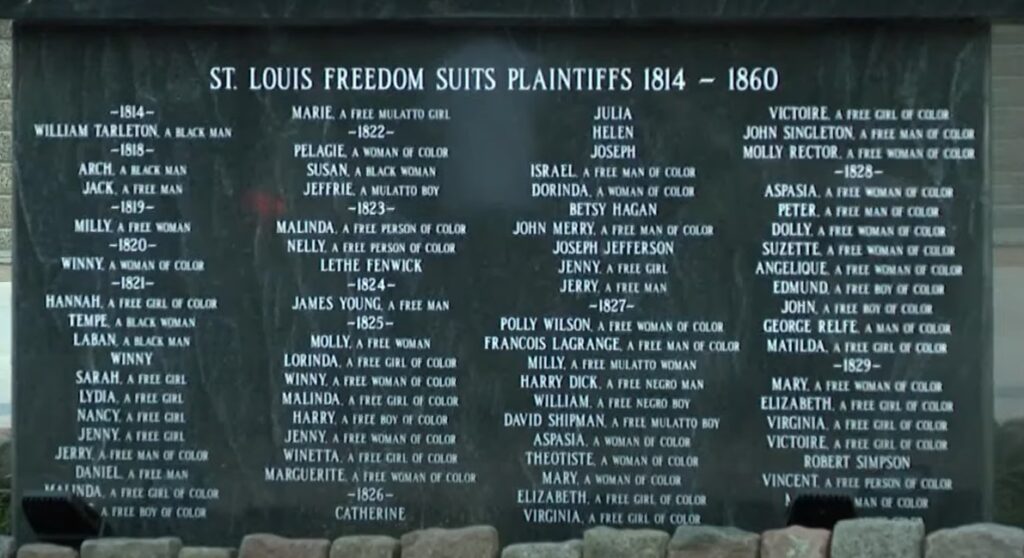
While those details of the story are mistaken or questionable, there is no doubt that the St. Louis cases of Milly, David, Henry, and William were just four of about 300 such Freedom Suits that were filed from 1814 to 1860 by blacks seeking either to obtain or to maintain their freedom. The suits of Milly, David, Henry, and William were among the 130 out of about 300 freedom suits that were successful. During Juneteenth weekend in 2022, the Freedom Suits Memorial in Freedom Plaza, in front of the St. Louis Civil Courts Building, was dedicated, honoring all 300 of those blacks who had upheld their freedom against the evil of slavery. Inscribed on the memorial are the names of every single person who sought liberty through a St. Louis freedom suit. Among the inscribed names are “Milly, a free mulatto woman,” “Harry Dick, a free Negro man,” “William, a free Negro boy,” and “David Shipman, a free mulatto boy.” The full story of the ordeal of Milly Shipman and her children and companions can be learned by studying the 150 pages of the case file of Milly v. Stephen Smith (including papers from three related cases), which is available at the website of the library of Washington University in St. Louis, Missouri.
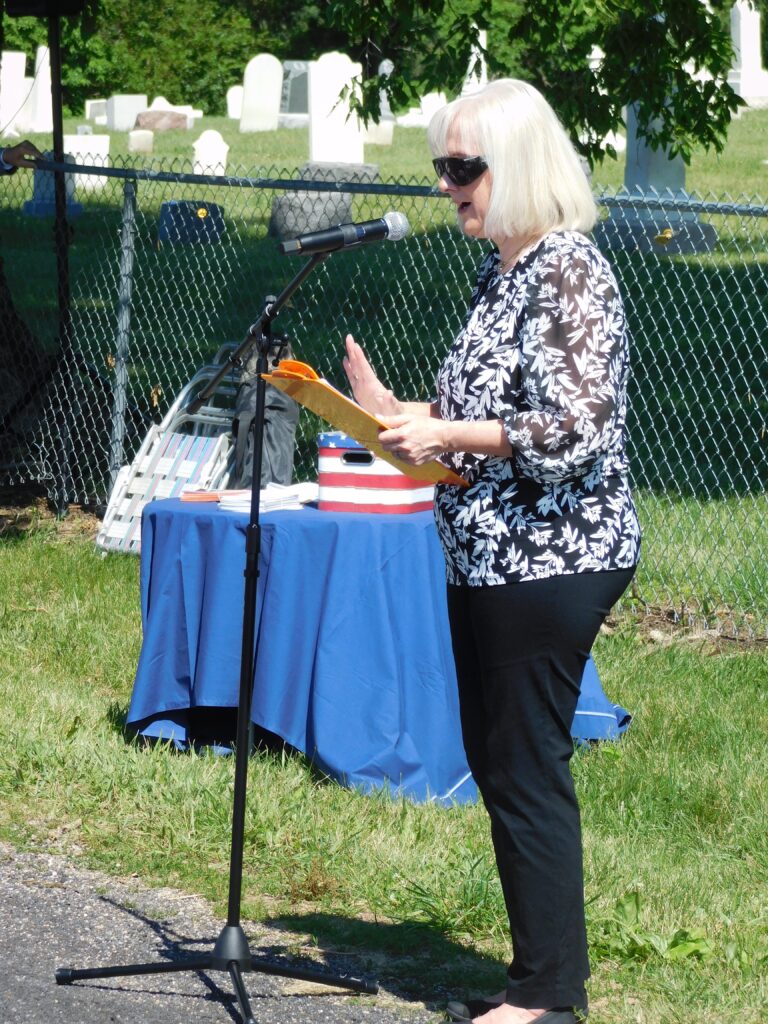
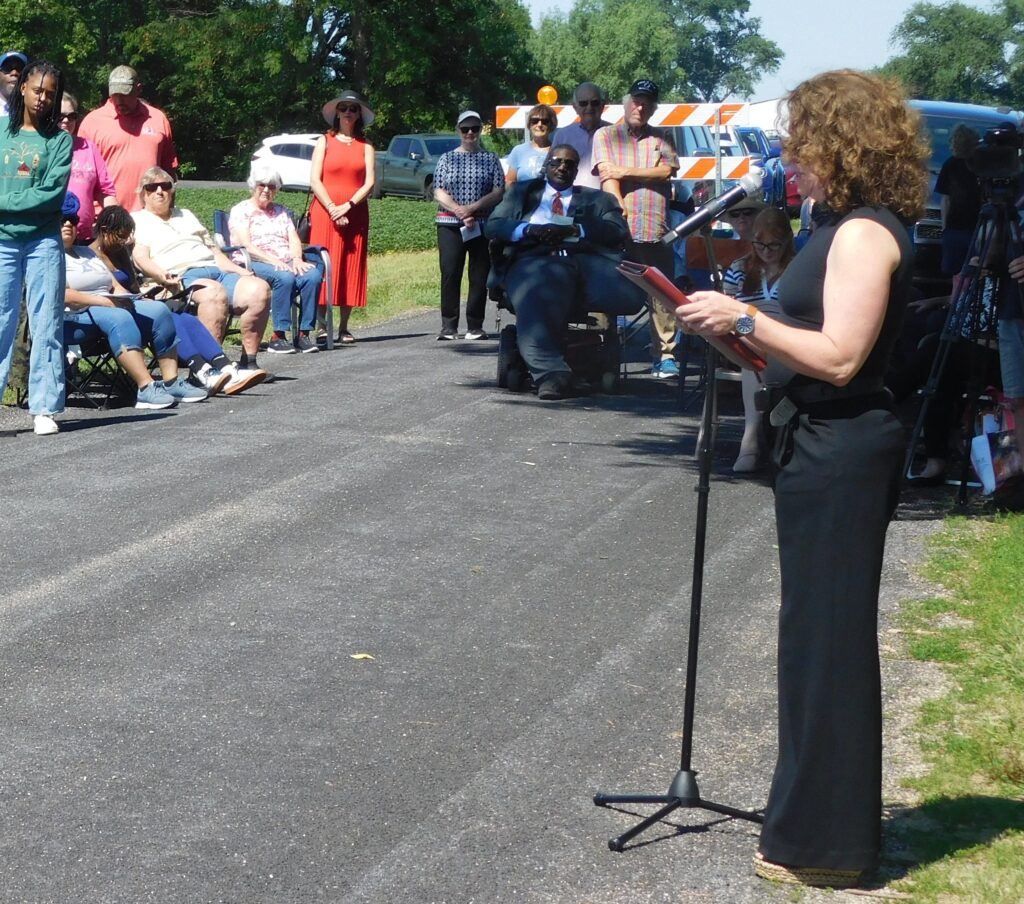
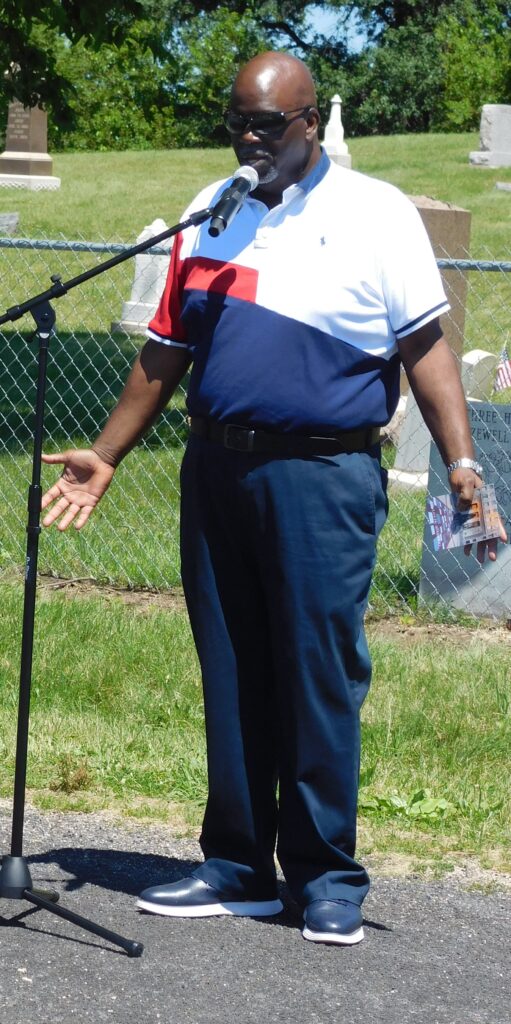
The first speaker at the Juneteenth program at Woodrow Cemetery was John C. Ackerman, president of the Tazewell County Genealogical & Historical Society and Tazewell County Clerk & Recorder of Deeds. Ackerman spoke on the importance of the Juneteenth holiday and why he is motivated to use the holiday to help people learn more about Tazewell County’s African-American history. He also acknowledged the members of the Woodrow family, after whom the cemetery is named and whose ancestor Samuel was one of the “Three Horsemen.” Ackerman also invited Cincinnati Township Supervisor Larry W. Mayberry to offer remarks on the occasion. Susan Rynerson told the story of the Shipman family “Freedom Pursuit” and the legal actions taken by Milly Shipman and her companions, with the help of Tazewell County’s prominent anti-slavery settlers, to secure their freedom.
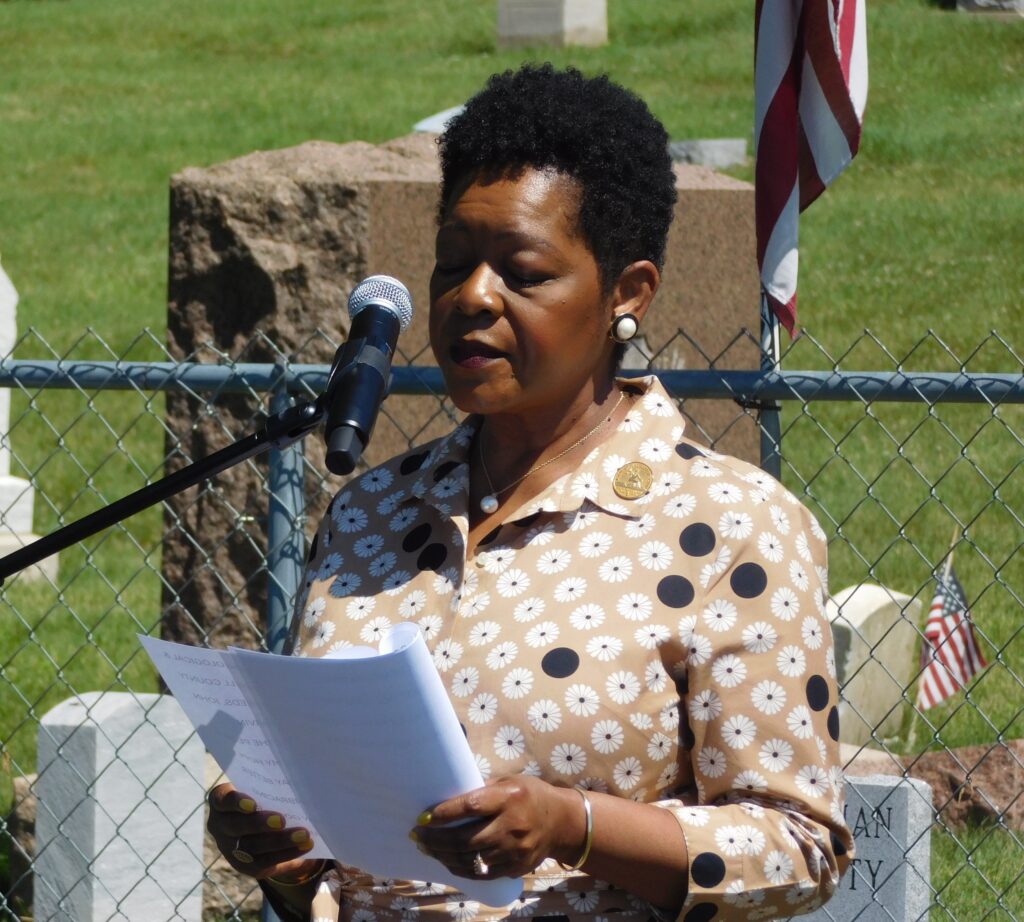
Afterwards, Illinois 10th Circuit Chief Judge Katherine S. Gorman introduced both Illinois Supreme Court Justice Lisa Holder White and the keynote speaker, retired Judge David C. Mason of St. Louis. Holder White, who previously came to Pekin in 2023 as the keynote speaker at the dedication of Legins-Costley Park, spoke on the meaning of Juneteenth and how important it is to remember history and to recover the memories of forgotten people and events. Judge Mason was specially invited to give last Friday’s keynote address because he had headed the efforts to create the St. Louis Freedom Suits Memorial. Delivering a paean to freedom and America with rhetorical skills that at times soared to the sermonic, Judge Mason’s address stressed the inestimable value of national unity and the moral imperative to uphold the rights enshrined in the Bill of Rights, especially the First and Second Amendments, and everyone’s right to due process. He also warned against the inherent tendency of corporate news media and social media to agitate the citizenry through polarizing extremes and intentional clickbait designed to attract online traffic as a business model. He also noted approvingly that the new “Three Horsemen of Tazewell County” monument and marker are the first such memorial associated with the St. Louis Freedom Suits outside of Missouri.
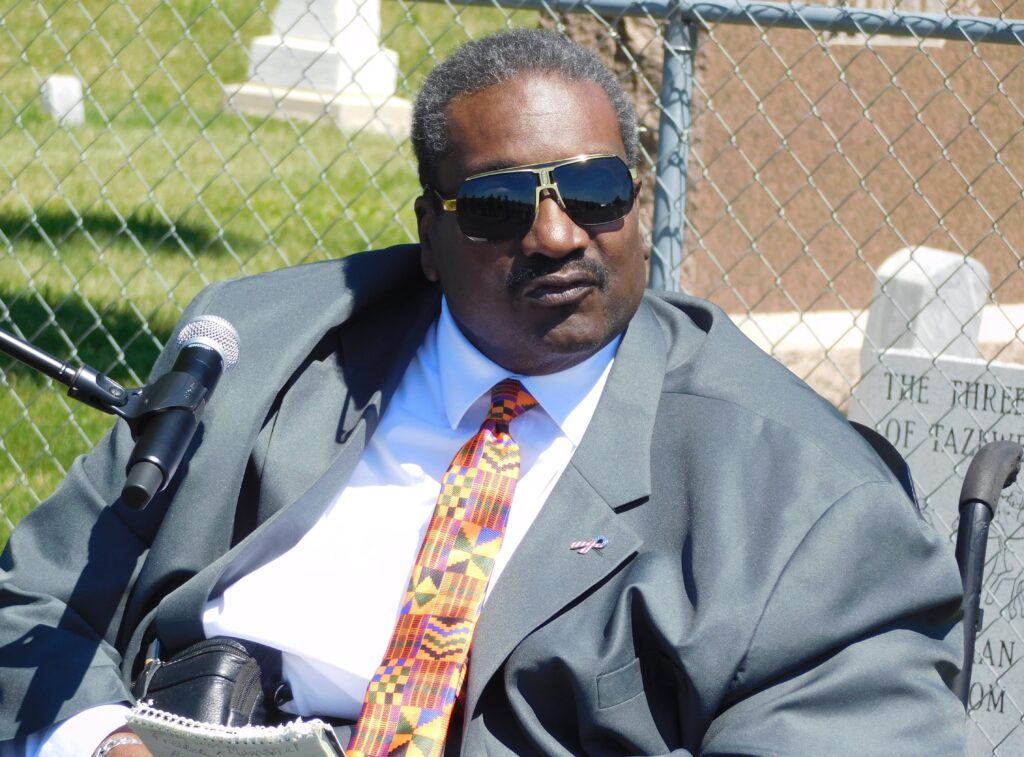
The program concluded with a prayer of benediction and dedication offered in the name of Jesus Christ by Pastor Marvin Hightower, president of the Peoria Branch NAACP, who reminded the gathering that black history is American history.