
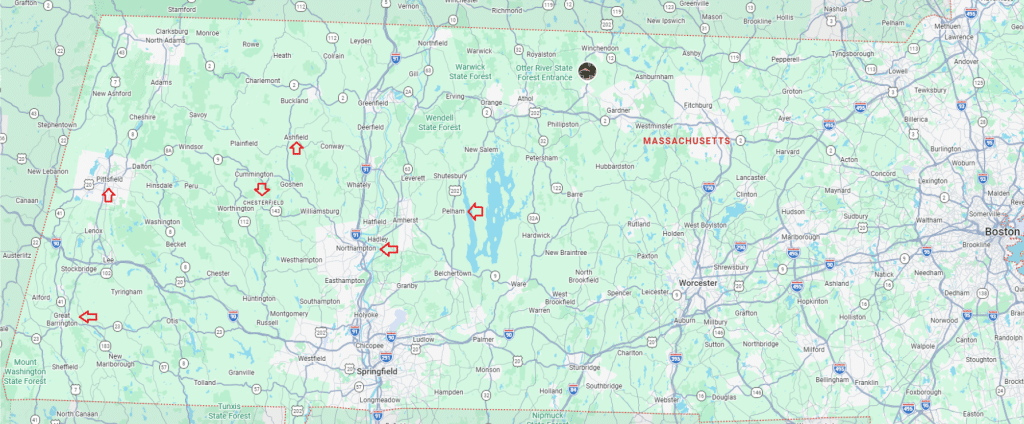
Among the Revolutionary War Patriots buried in Tazewell County was Pvt. Elliot Gray (1755-1841) of Morton Township, buried in Groveland Township in rural Morton. Elliott Gray was born 17 Sept. 1755 in Pelham, Massachusetts, a son of Jonathan Gray (1730-1801) and Margaret (Patrick) Gray (1734-1771). Before he came to Tazewell County, Illinois, he lived almost exclusively in Pelham, apart from three years when he lived in Ashfield, Massachusetts, and also during the terms of his militia service during the Revolutionary War.
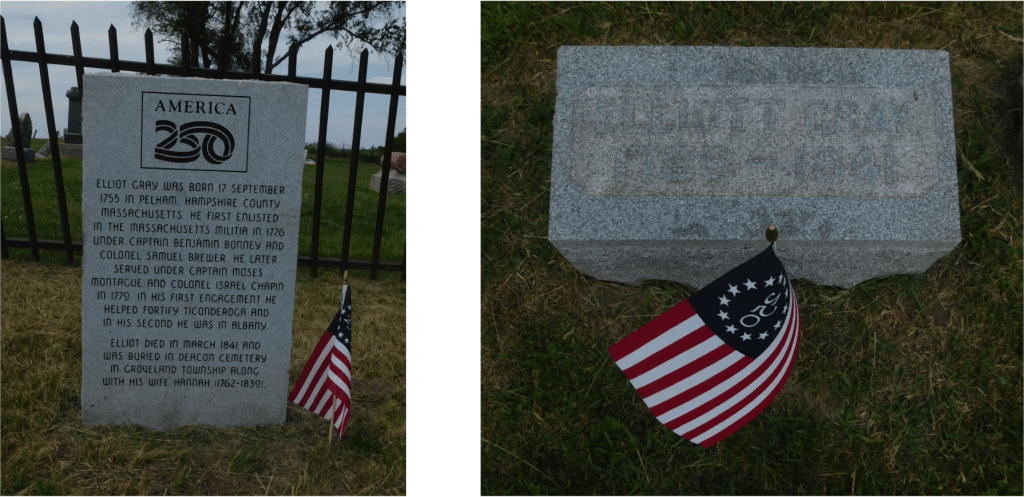
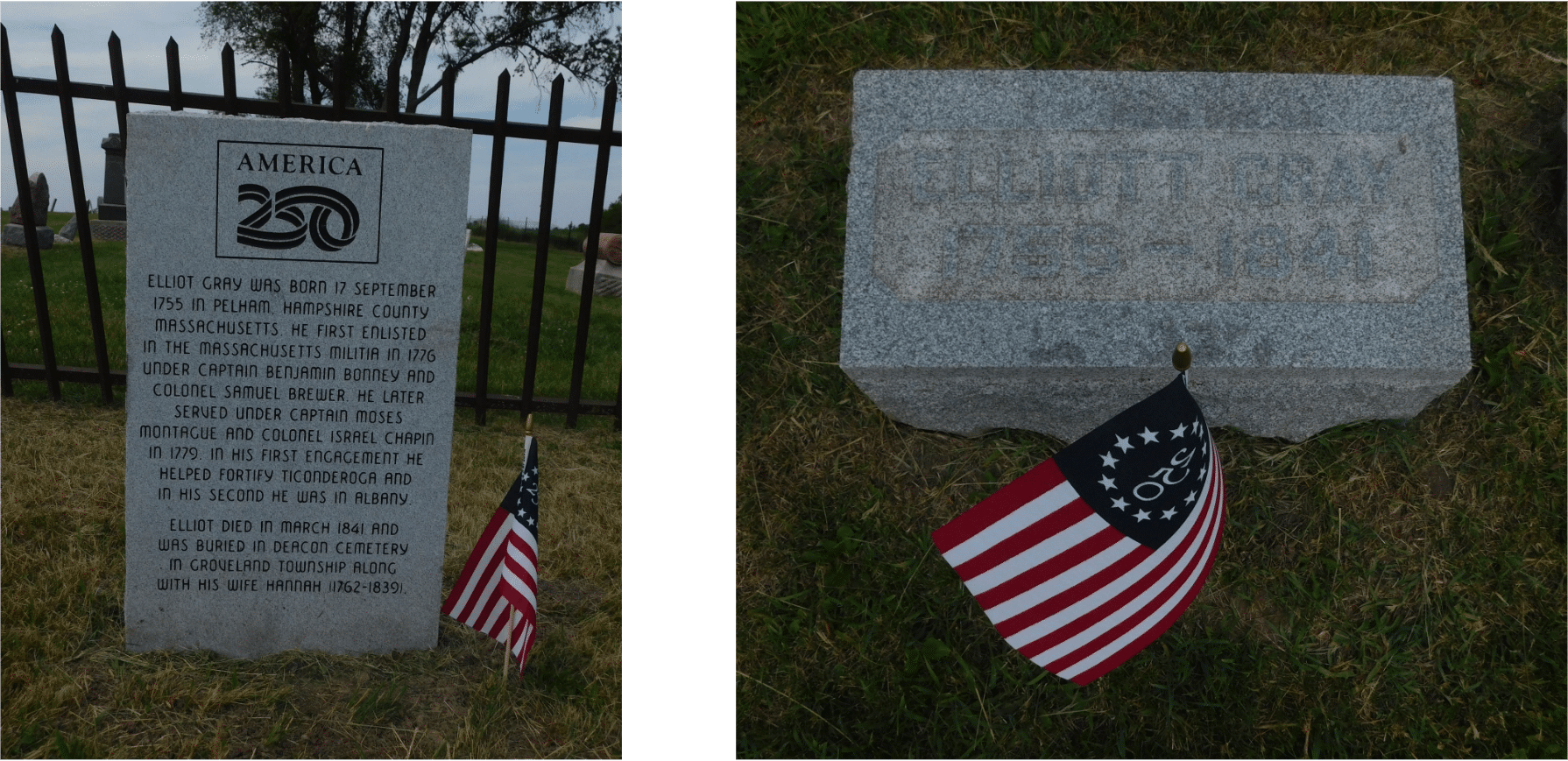
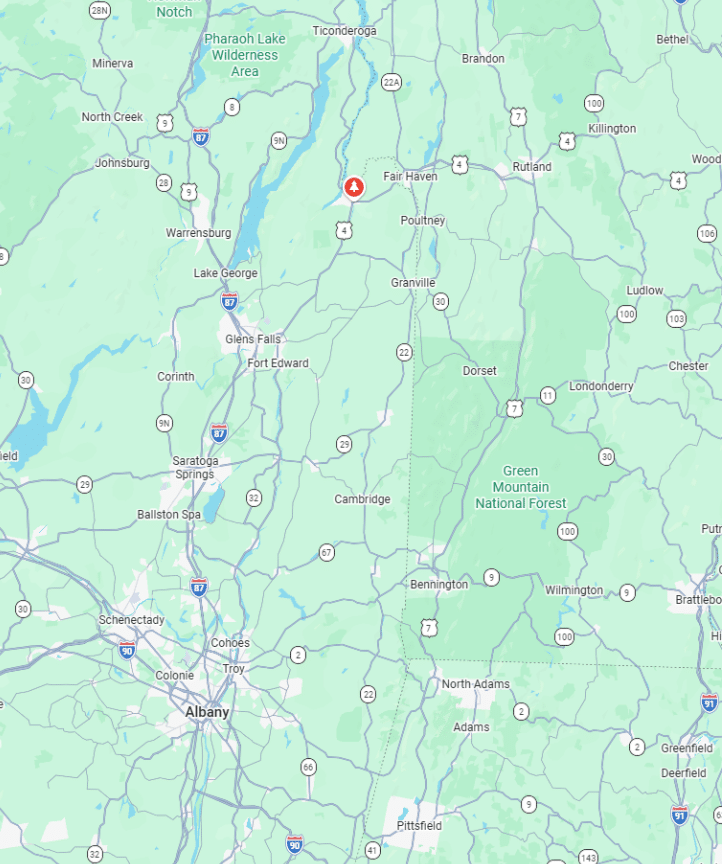
Elliot first enlisted in the Massachusetts militia in 1776, at age 21, serving at the rank of Private in Capt. Elijah Dwight’s company, afterwards under Capt. Benjamin Bonney and Col. Samuel Brewer. That year he helped fortify Ticonderoga. He again served in the militia in 1779 under Capt. Moses Montague and Col. Israel Chapin, aiding with the defense of the area of Albany, New York.

After the war Elliot returned to Pelham, where on 11 Feb. 1787 he married Hannah Crawford (1762-1839), daughter of John and Susanna Crawford. Their children included daughters, Margaret (1788-1848), Susanna (1790-1870), who married Samuel Clark, Pamela (1792-1865), who married Chester Chapin, Polly (born 1794), son Isriel (1797-1799), daughter Sarah (1800-1875), who married Jason Carpenter, and two sons, Eri (1803-1868) and Willard (1806-1874), who was an Underground Railroad conductor in Morton Township. The 1790 U.S. census shows Elliot in Ashfield with his wife and two females (Margaret and probably Susanna). The U.S. censuses of 1810, 1820, and 1830 show him and his family living in Pelham. On 8 April 1834, Elliot applied for a Revolutionary War soldiers’ pension under the Act of 1832, and his pension was approved.
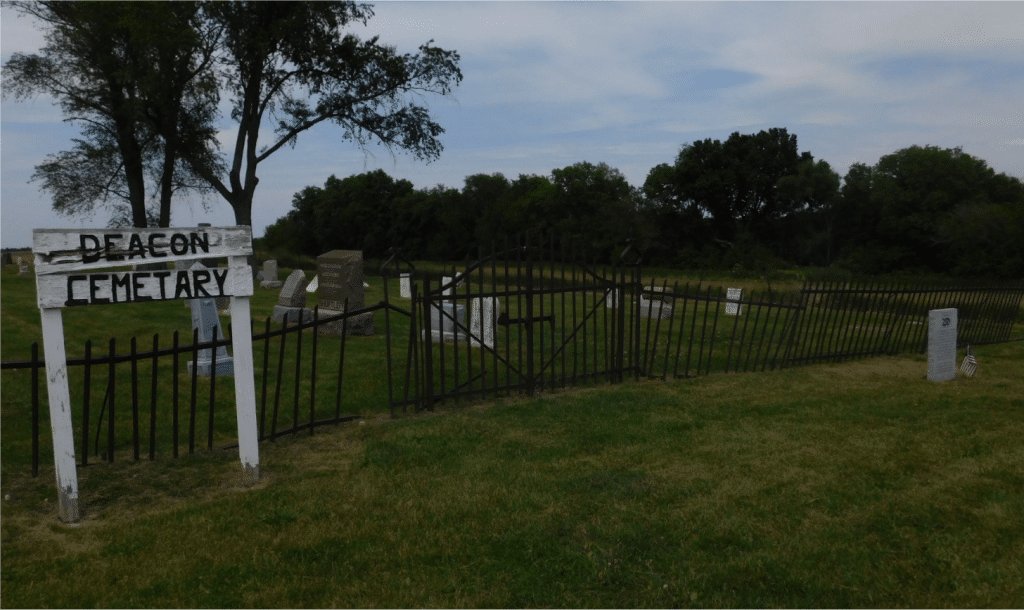
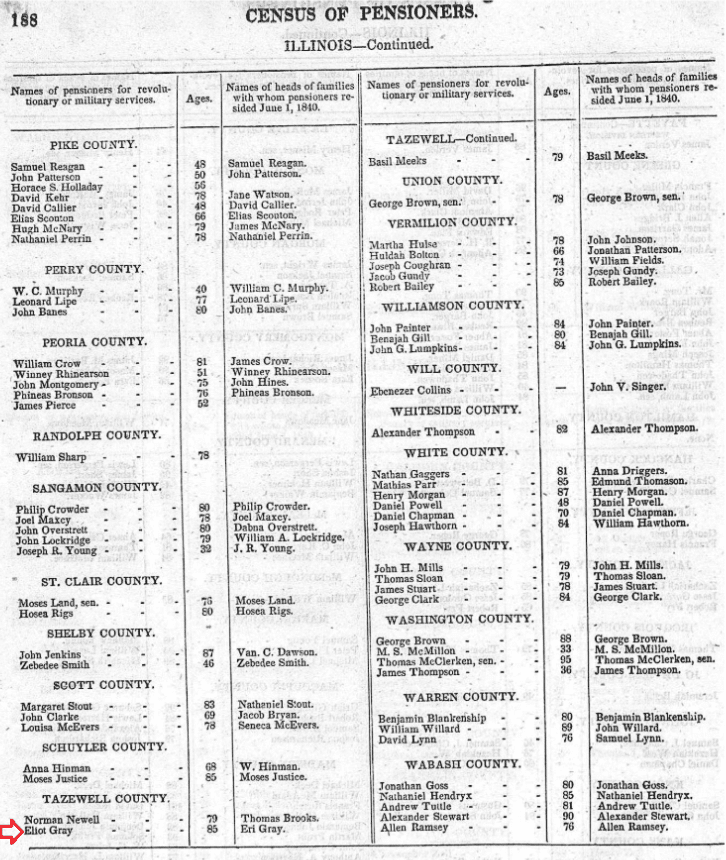
In 1839 he and Hannah and three of their children moved to Tazewell County, settling in Morton Township. In the 1840 census, Elliot’s son Eri Gray is listed with three men and one woman in his household, which included Elliot. Elliot died in March 1841 in Morton Township and was buried in Deacon Cemetery in Groveland Township, rural Morton. Also buried in Deacon Cemetery are Elliot’s wife Hannah and their daughters Margaret and Susanna. The cemetery was west of and adjacent to the land of Elliot’s daughter Susanna and her husband Samuel Clark, who had arrived in Tazewell County by 1833 when Samuel bought land in Section 25 of Groveland Township.
Samuel and Susanna Clark had a son Joel Clark (1818-1879), whose daughter Ellen F. “Ella” Clark (1851-1949) was a Peoria D.A.R. member and Chapter Secretary. On 26 Aug. 1914, Ella had Elliot’s grave marked as a Revolutionary War soldier, but the D.A.R. nameplate and stake have since gone missing.
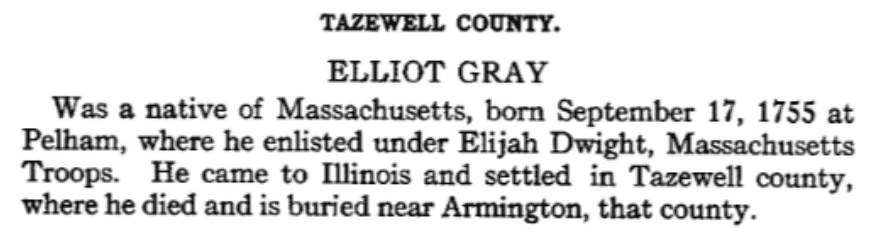
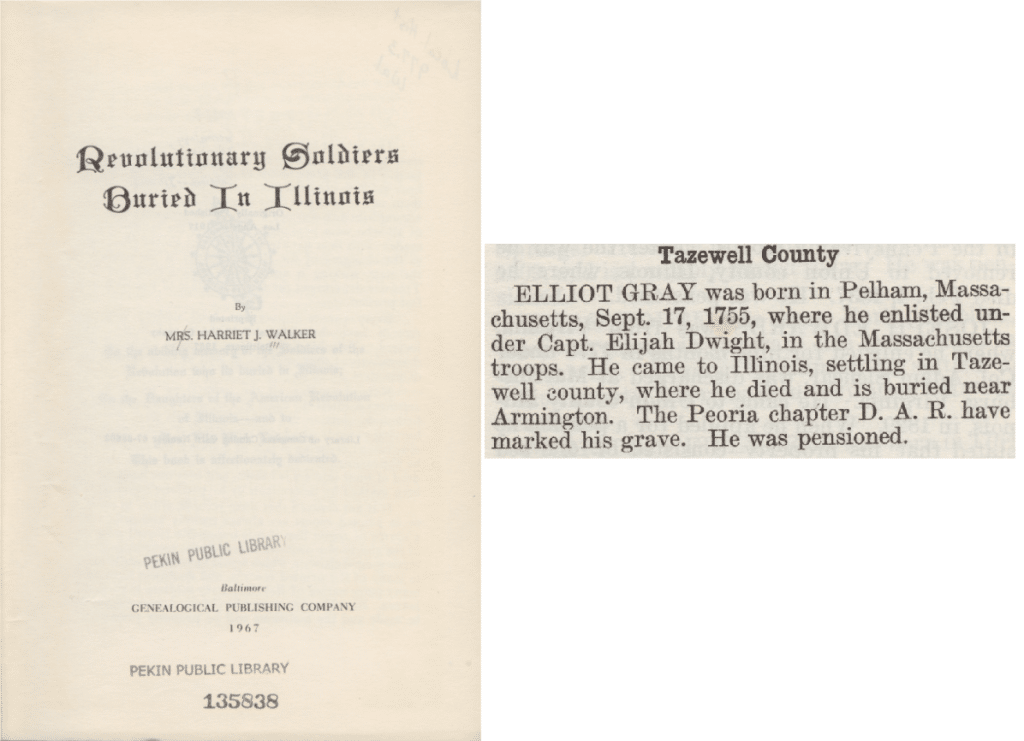
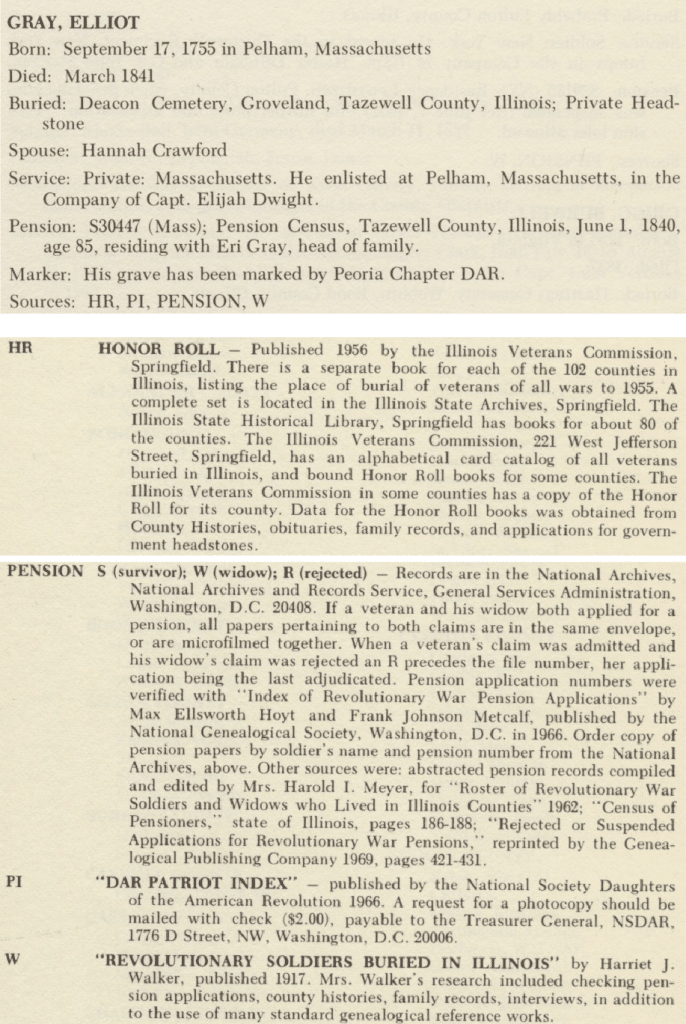
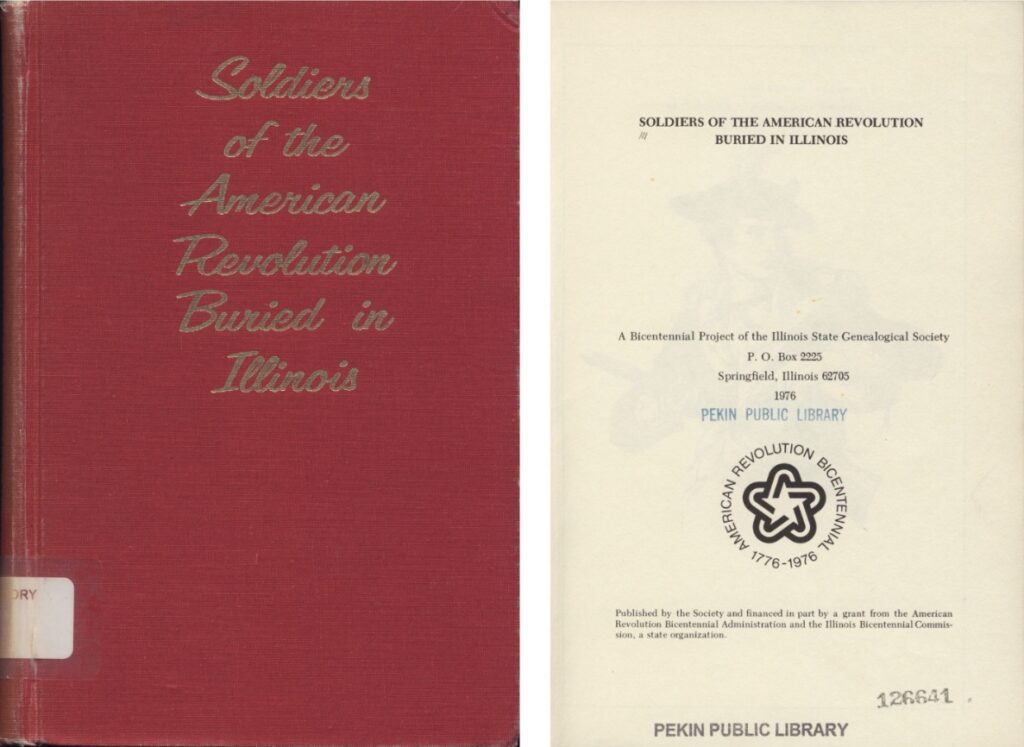
Following is a review of previous publications and historical records that recorded and documented Elliot’s Revolutionary War service, including Elliot’s own narrative of what he did during the Revolutionary War which he submitted to obtain his war pension in 1834.



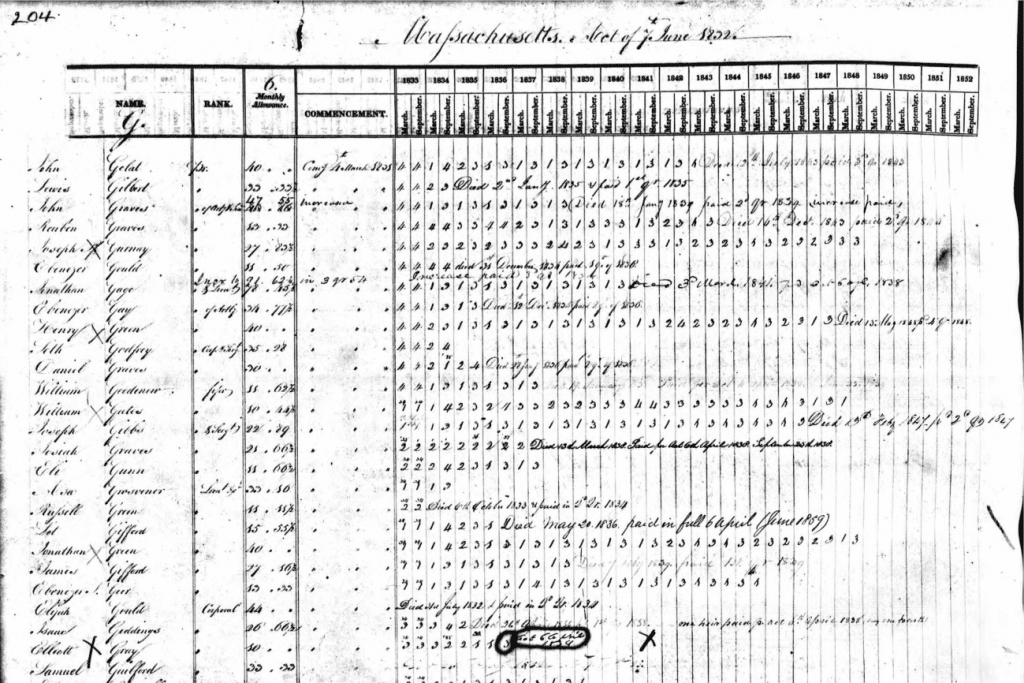
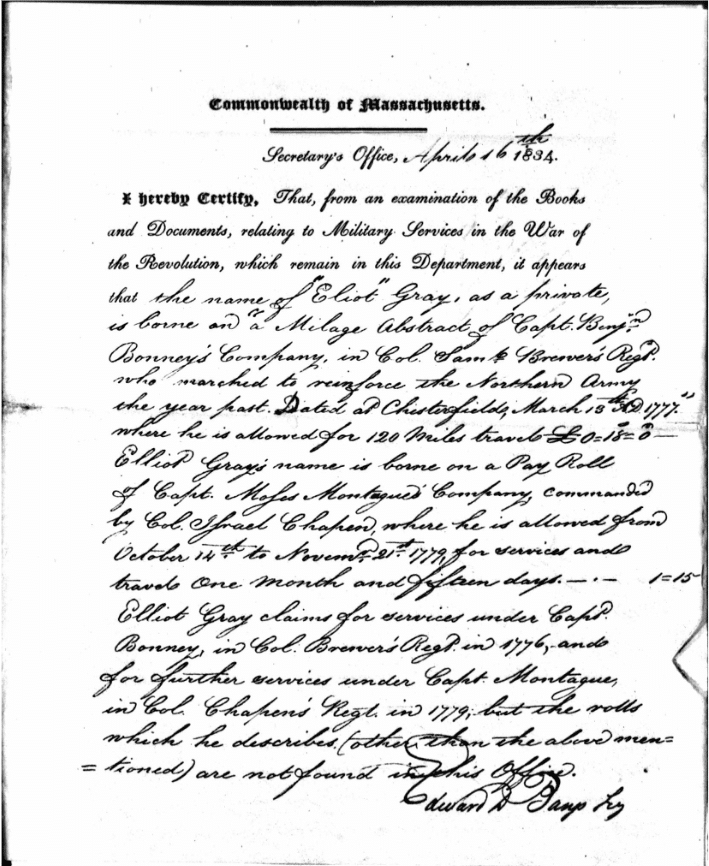
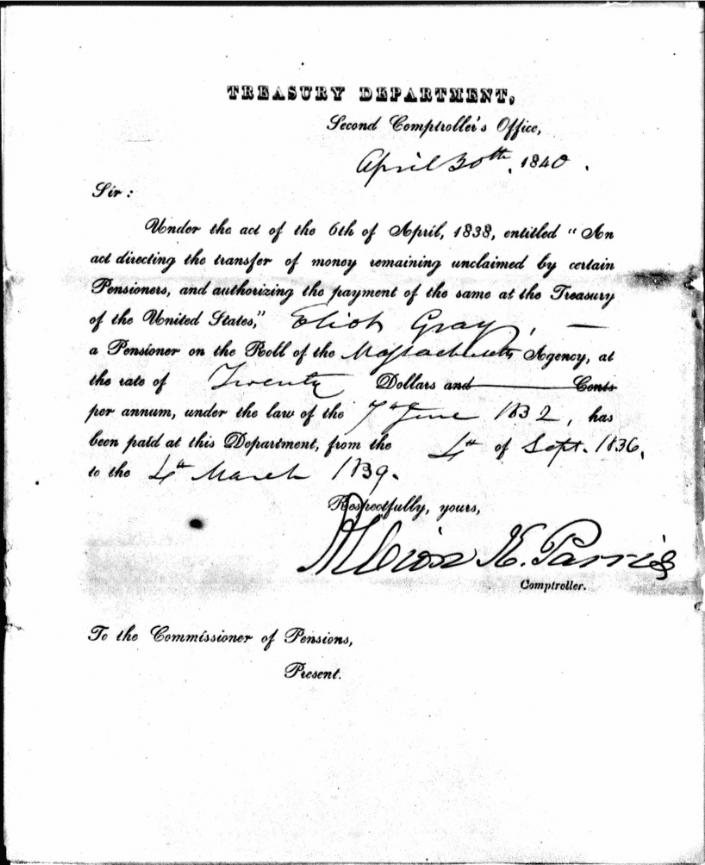
Elliot Gray applied for his pension in 1834 and it was approved that year. As the above 1849 pension roll shows, his pension payments were backdated to March 1833, but payments are only shown through 1839, the year he left Massachusetts and moved to Illinois. Someone much later added an “X” in 1841, the year of his death. Following are a few key documents from Elliot’s 1834 pension file.
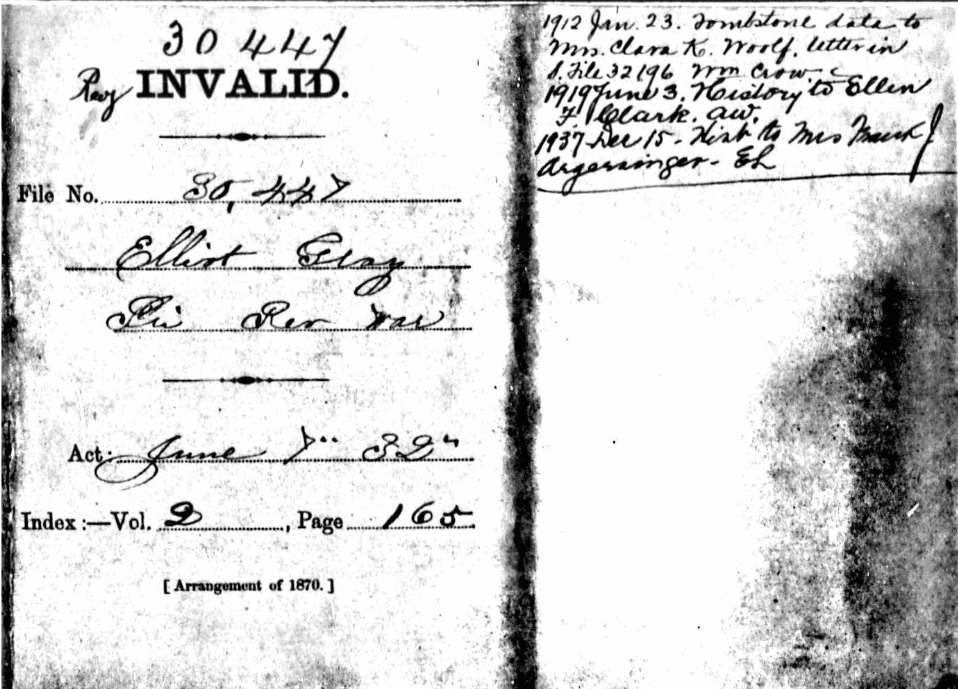
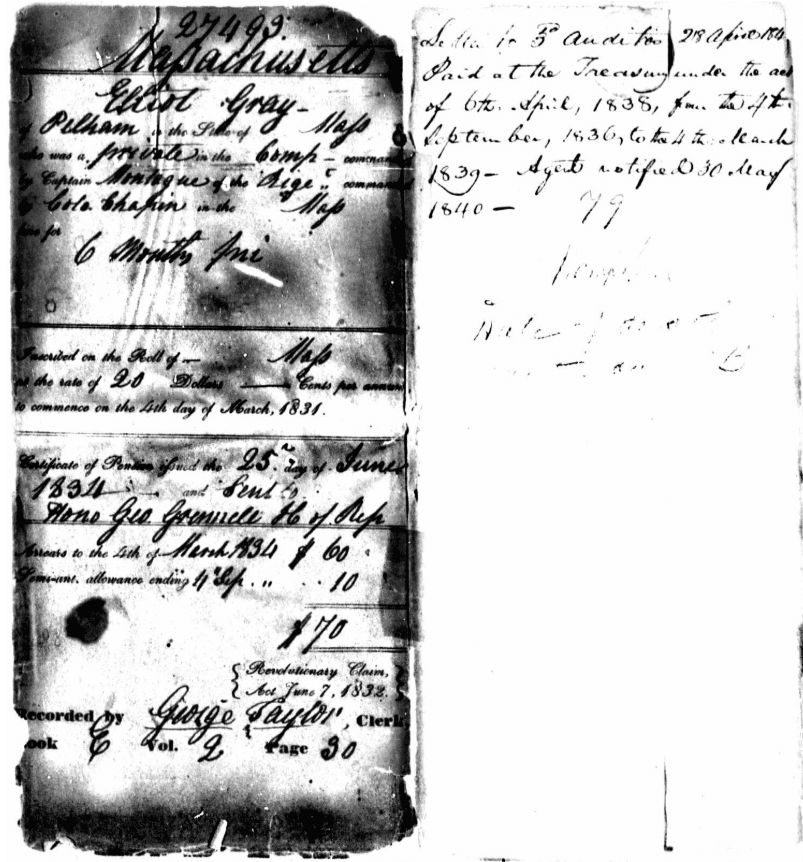
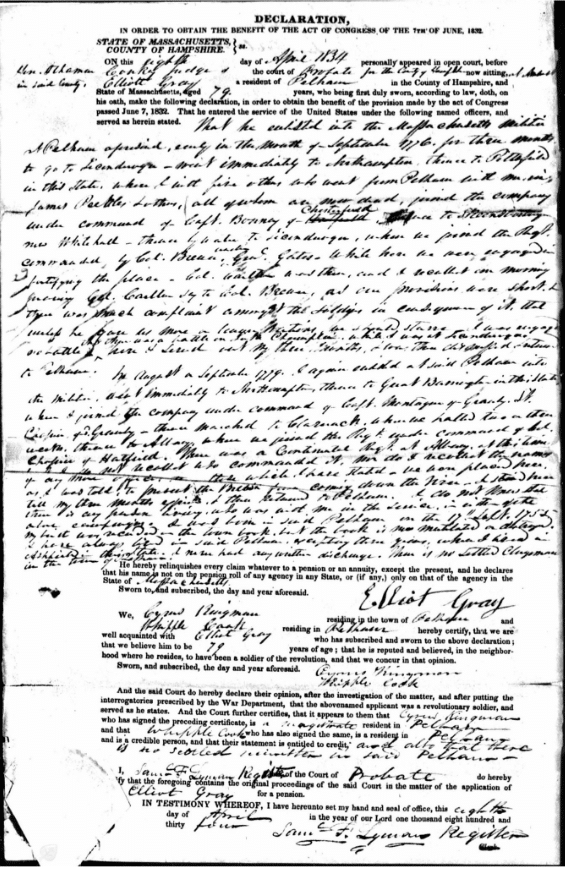
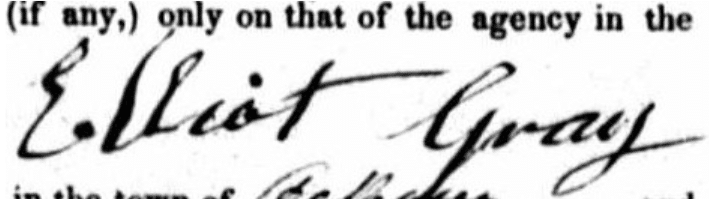
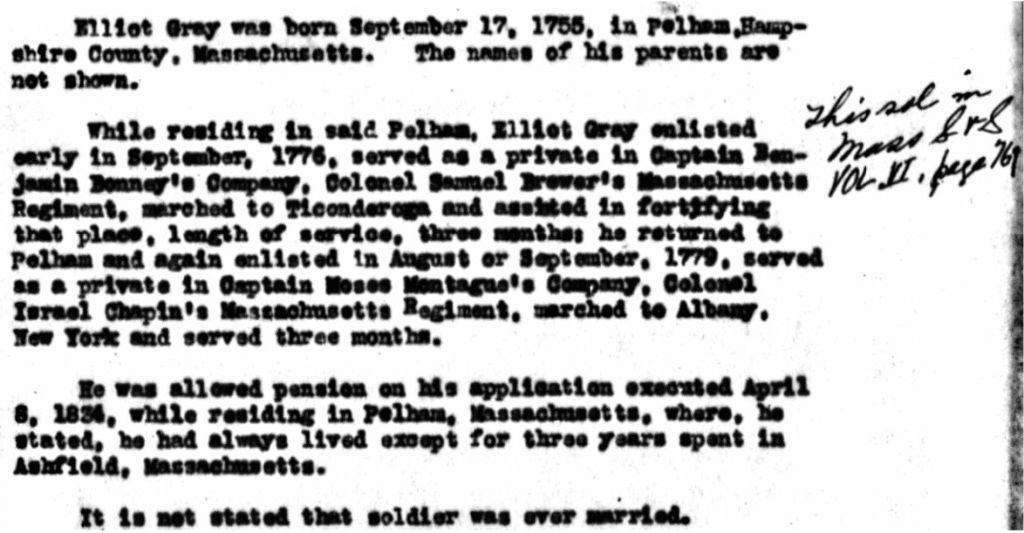
Unfortunately the digital scan of Elliot Gray’s service narrative is not the highest quality, and the handwriting in the narrative is also difficult to read. Nevertheless, with some pains I have been able to make the following transcription, so we may here read what Elliot himself had to say about his service during the Revolutionary War:
“. . . that he enlisted into the Massachusetts militia at Pelham aforesaid, early in the month of September 1776, for three months to go to Ticonderoga – went immediately to Northampton, thence to Pittsfield in this State, when I with five others who went from Pelham with me, ___ James Peebles __the_, all of whom are now dead, joined the company under command of Capt. Bonney at Chesterfield, thence to Skeensborough now Whitehall – thence by water to Ticonderoga, we joined the Regt. commanded by Col. Brewer, under Genl. Gates. While here we were engaged in fortifying the place. Col. Carlton [and?] them, and I recalled one morning hearing Col. Carlton say to Col. Brewer, [that?] our portions were short. There was much complaint amongst the soldiers in consequence of it, that unles he gave us more and larger rations we should starve. I was engaged [in] no battle tho there was a battle on Lake Champlain while I was at Ticonderoga. Here I served out my three months, I was then discharged & returned to Pelham.
“In August or September 1779, I again enlisted at said Pelham into the militia, went immediately to Northampton, thence to Great Barrington in this State, where I joined the company under command of Capt. Montague at Granby. St. Chapin and Granby – thence marched to Claverack, where we halted two or [three?] weeks, thence to Albany, where we joined the Regt. under command of Col. Chapin at Hatfield. There was a Continental Regt. at Albany at this time but I do not recollect who commanded it. Nor do I recollect the name of any more officers, but those which I have stated. We then placed here, as I was told, to prevent the British from coming down the [River?] – I staid here till my three months expired. I then returned to Pelham. I do not know the [name?] of any person living, who was with me in the service, in either of the above companies. I was born in said Pelham on the 17th Sept. 1755. My birth was recorded in the town book, but the book is now mutilated or destroyed. I have always lived in said Pelham, excepting three years, when I lived in Ashfield in this State. I never had any written discharge. There is no settled clergyman in the town of Pelham.”
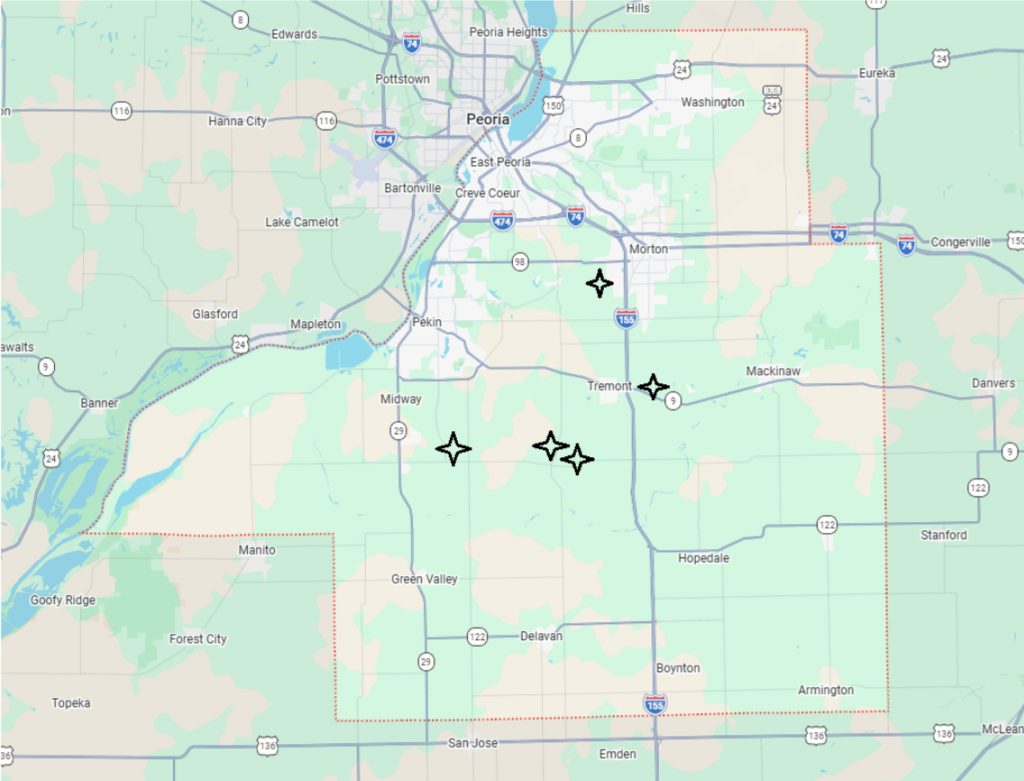
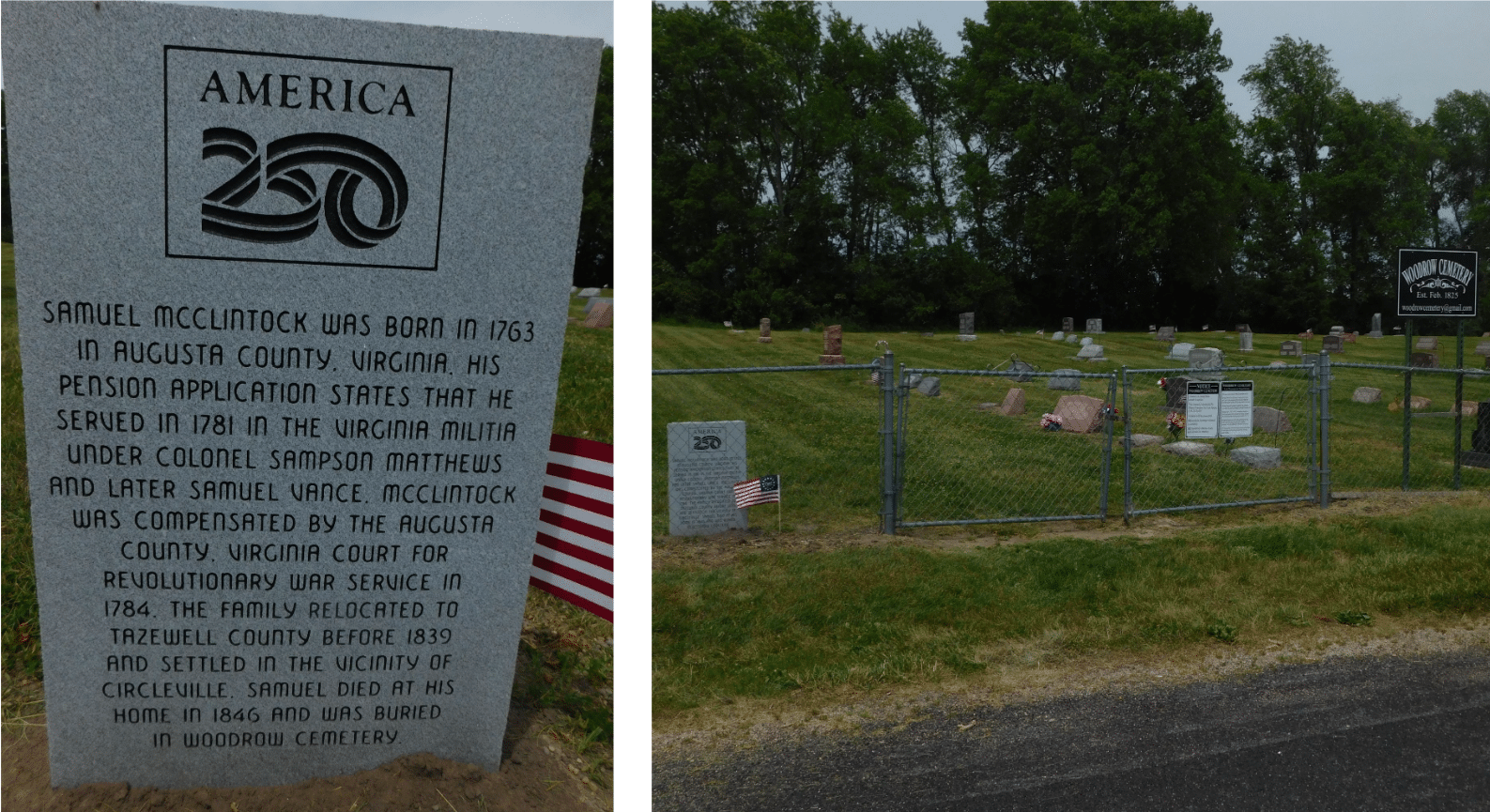
In May 2026, the Tazewell County Genealogical & Historical Society placed special U.S. Semiquincentennial monuments at or near the Tazewell County cemeteries where five Revolutionary War soldiers are buried. The monuments are inscribed with summaries of the Revolutionary War service of each Patriot, the summaries being written by TCGHS past president Susan Rynerso. An “America 250” dedication event for those five new monuments took place on Saturday, 30 May 2026 (traditional Memorial Day), at Antioch Cemetery south of Tremont, where one of those soldiers, David Shipman, is buried. Deacon Cemetery in Groveland Township, where Elliot Gray is buried, is located on the north side of Queenwood Road in rural Morton. The Elliot Gray monument was placed just outside the front wrought-iron fence of the cemetery, where passersby can easily see it.