
This is a revised and expanded version of a “From the Local History Room” column that first appeared in May 2013 before the launch of this weblog, republished here during the American Semiquicentennial year.
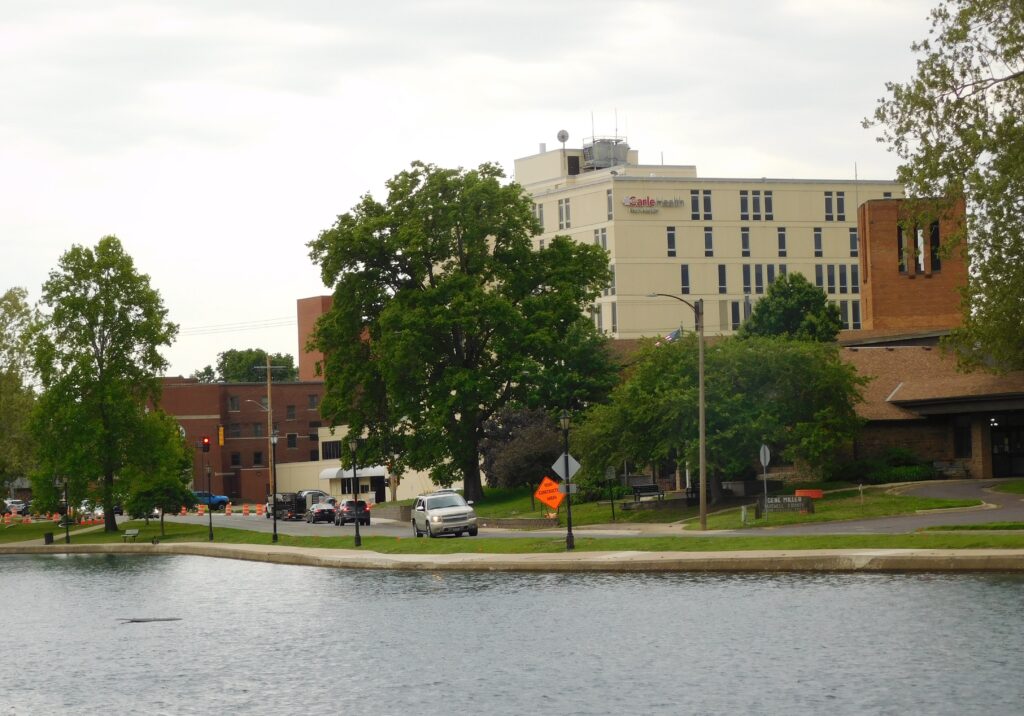
The occasion of the American Semiquicentennial is an ideal time to recall the history of Pekin’s own hospital, which celebrated its own centennial in 2013. The history of this hospital – redubbed by its current corporate owners as “Carle Health Pekin Hospital” – began in 1913, when the community’s need for a public hospital led to the formation of a non-profit Pekin hospital corporation.
That is not the year Pekin Hospital opened its doors, however. Rather, that year the hospital’s board, headed by Presidents G. A. Kuhl and J. M. Rahn, commenced fundraising campaigns to raise money for the construction of a hospital. Those efforts enabled the construction of a hospital building in 1918, which therefore would be 108 years old if it still existed.
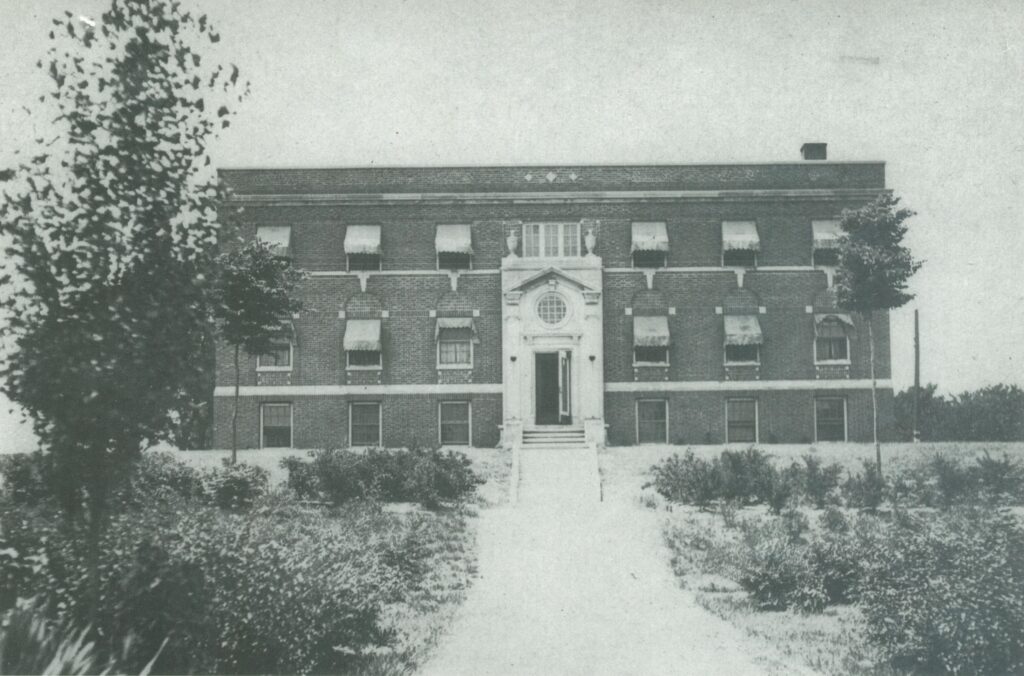
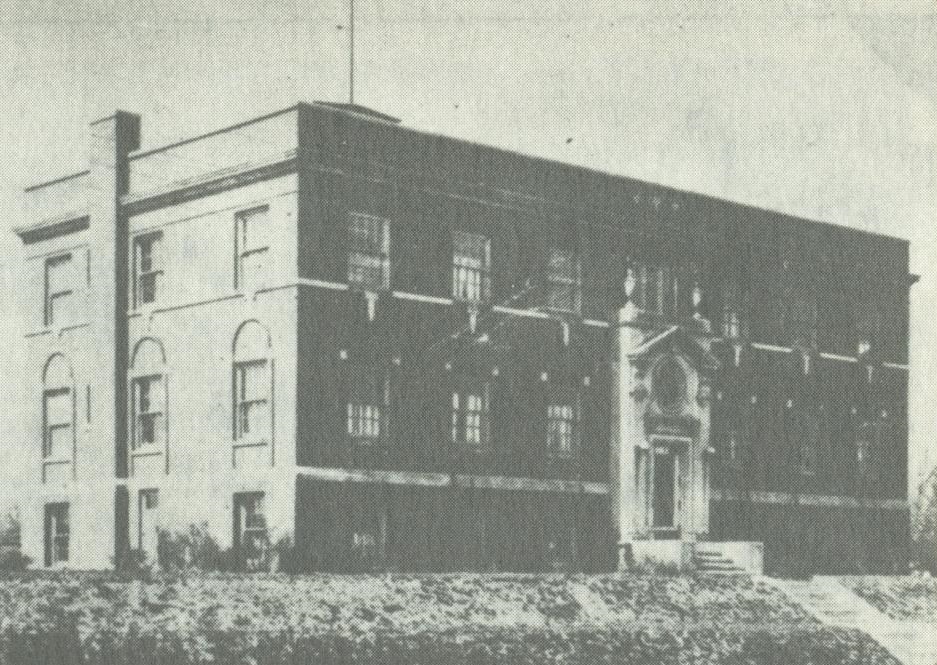
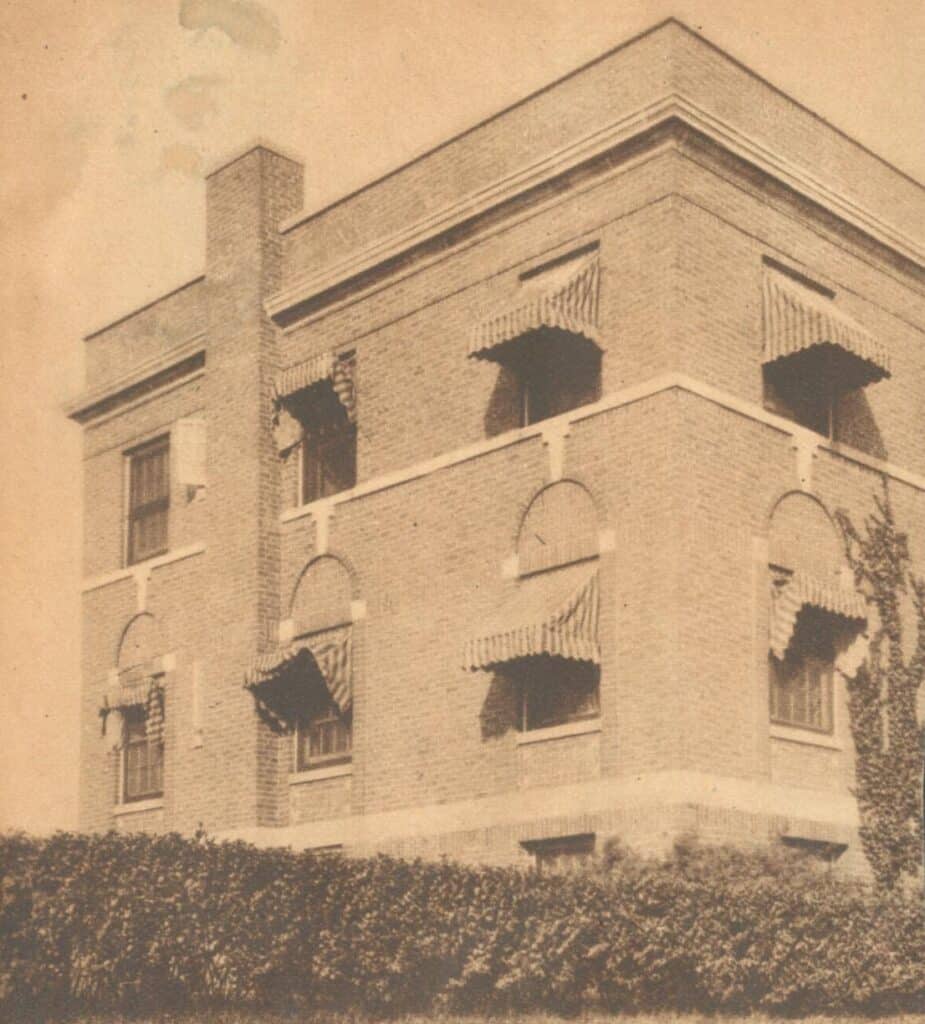
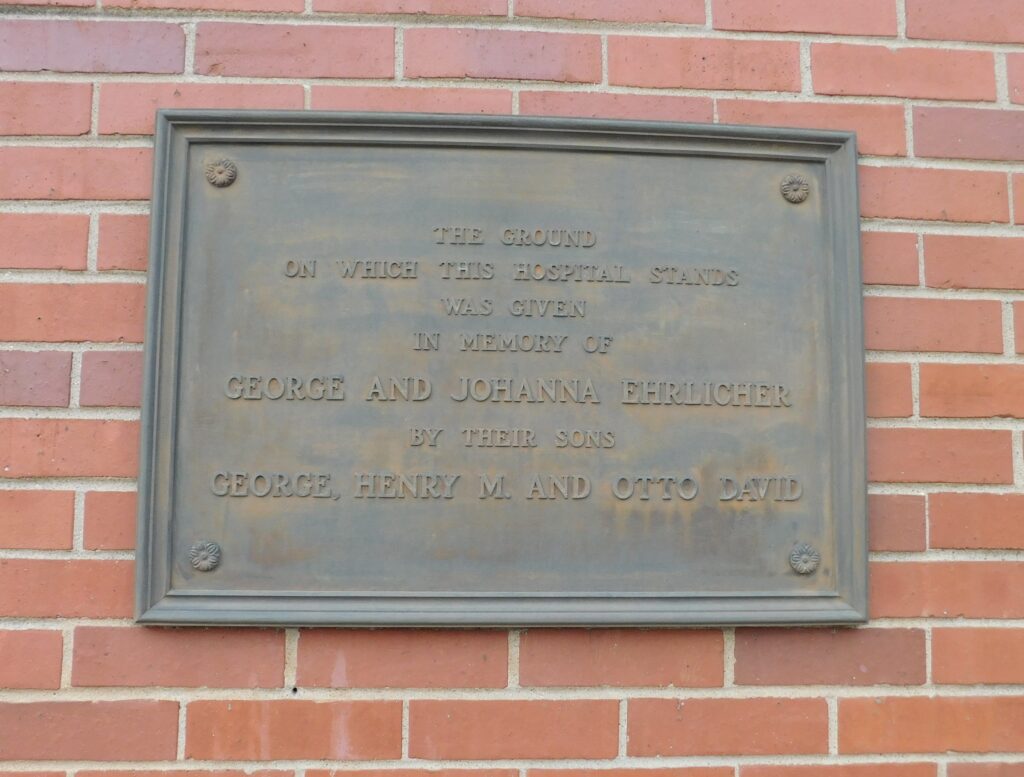
Built by Ed F. Lampitt & Sons building contractors, the 1918 facility was erected on 14th Street between Court Street and Park Avenue on land donated by three Ehrlicher brothers and their wives, George Jr. and Mary, Henry and Amelia, and Otto D. and Minnie. (Henry and Otto were Pekin’s first pharmacists.) The Ehrlichers donated the land in memory of their parents George and Johanna Ehrlicher. It should be noted that “Pekin: A Pictorial History” (1998, 2004), p.142, mistakenly substitutes the surname of “Herget” for George Jr.’s real surname.
The new edifice was formally dedicated Sunday afternoon, 2 June 1918, in ceremonies that were attended by a crowd of about 5,000. In its front page story on 3 June 1918, the Pekin Daily Times estimated that about 10,000 people toured the newly opened hospital that day.
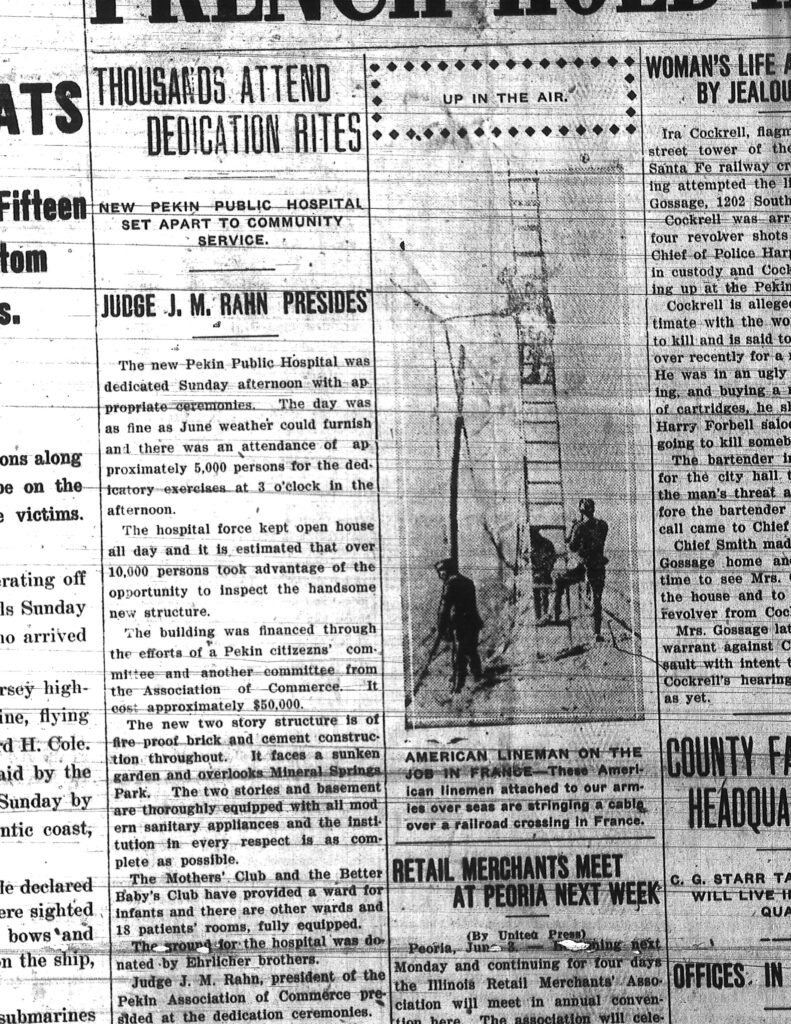
The standard historical publications on Pekin’s history offer differing figures on the first hospital’s capacity. The 1949 Pekin Centenary says in one place that the hospital had a capacity of 20 beds, but elsewhere in the same book it says the capacity was only 18 beds, while the 1974 Pekin Sesquicentennial says the hospital had a capacity of 30 patients. The Pekin Daily Times story of the dedication ceremonies says the hospital had “18 patients’ rooms, fully equipped.”
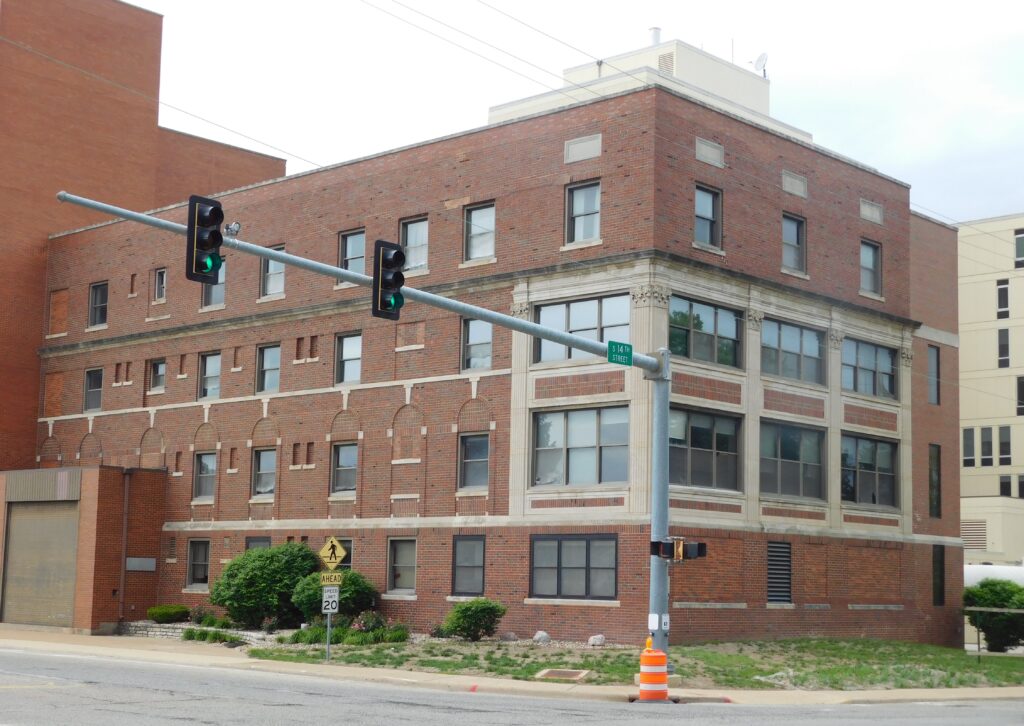
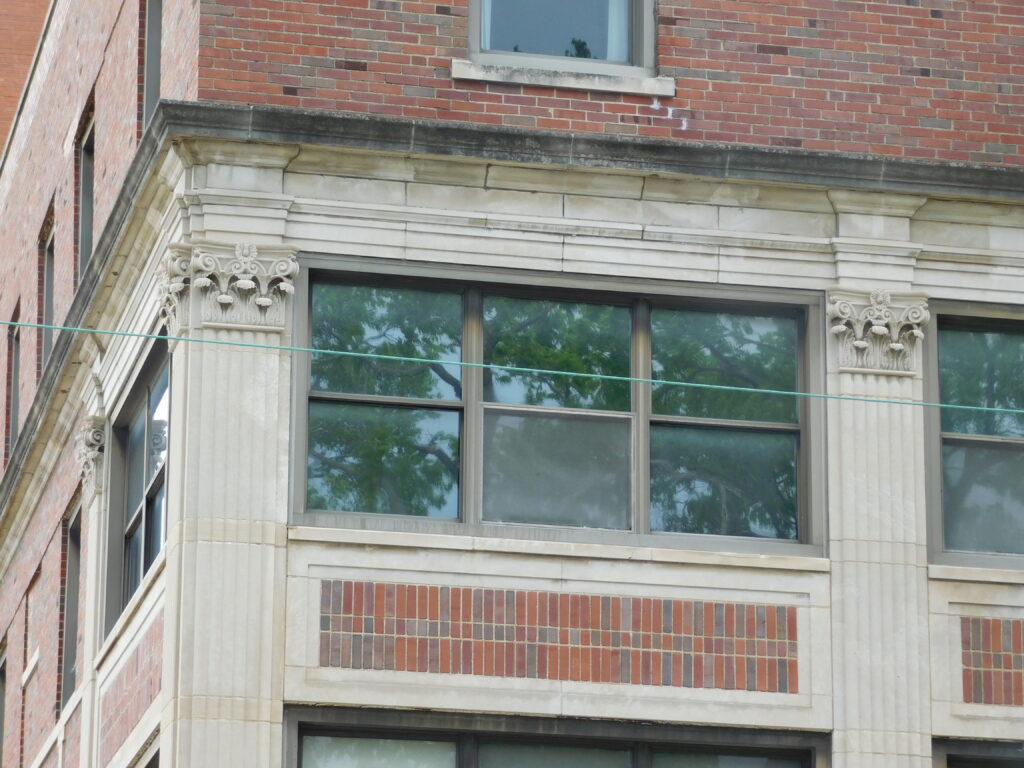
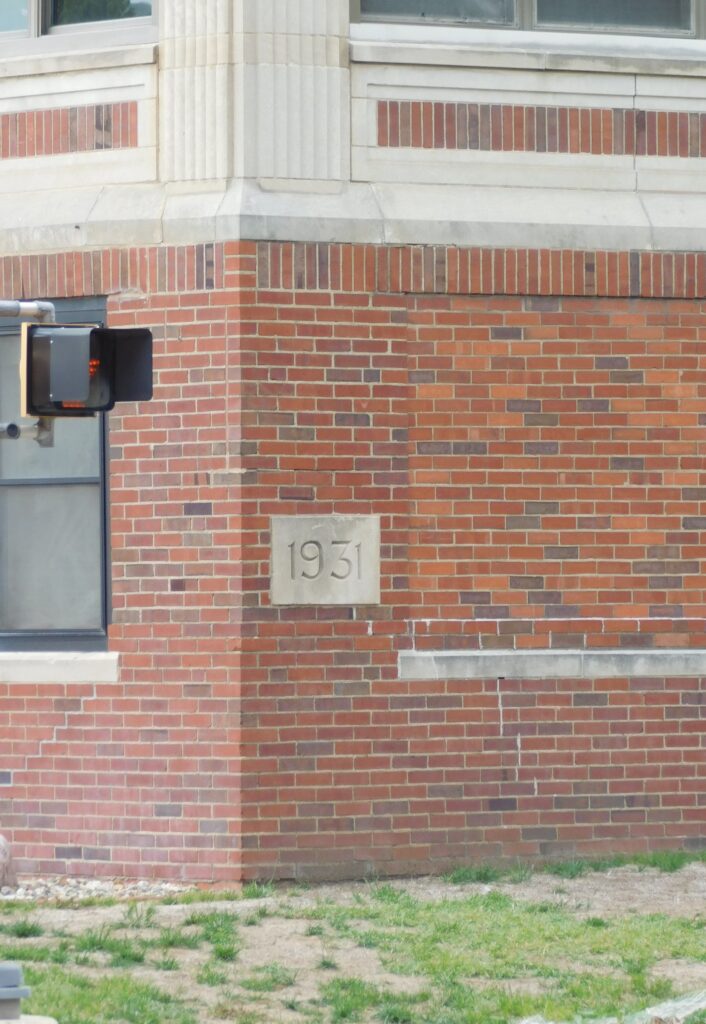
Whatever the correct figure was, within a few years the need was evident for a larger hospital. “In 1931, a $150,000 fundraising drive (no small feat during a depression) resulted in additional construction and remodeling which boosted the capacity to 75 beds. This portion of the hospital is on Park Avenue, and for many years the main entrance was from that street,” says the 1974 Sesquicentennial.
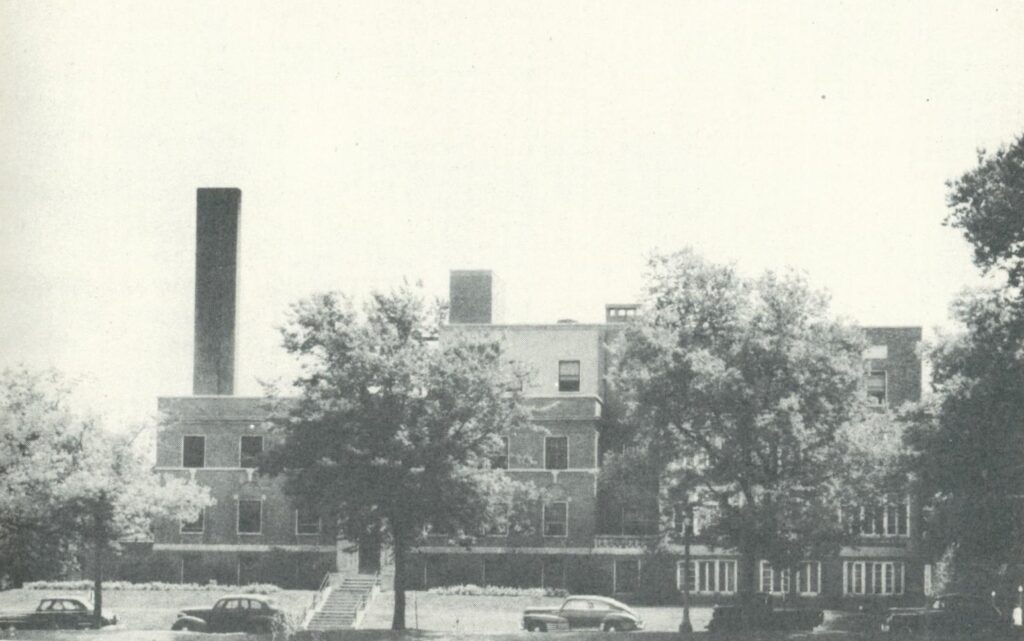
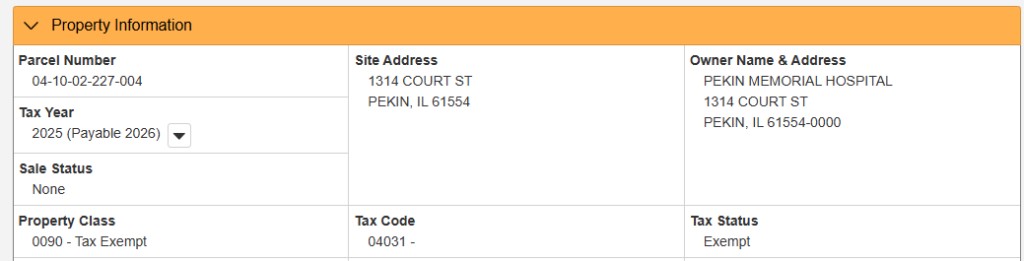
One notable post-World War II change to Pekin Public Hospital was its renaming as “Pekin Memorial Hospital” in honor of Pekin’s soldiers who had given their lives in service to their country. Interestingly, while the hospital is now called “Carle Health Pekin Hospital,” Tazewell County property tax records still show the legal owner of the land parcels of the hospital campus as “Pekin Memorial Hospital.” Even after “Memorial” was dropped in the 1990s, emergency communications continued to use the abbreviation “PMH” for Pekin’s hospital, and not a few Pekinites still refer to the hospital as “Pekin Memorial Hospital.”
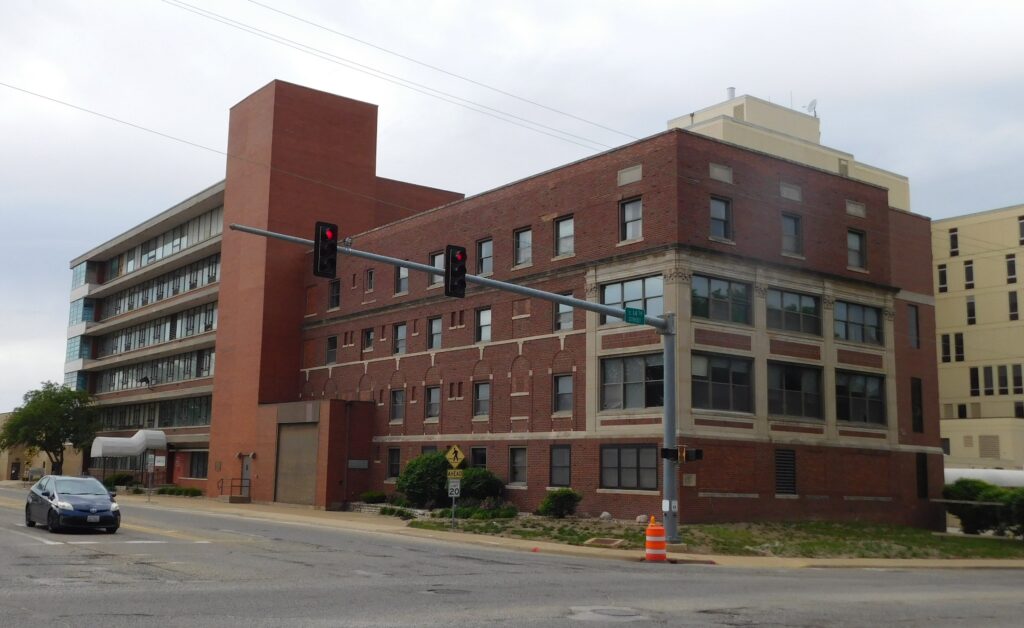
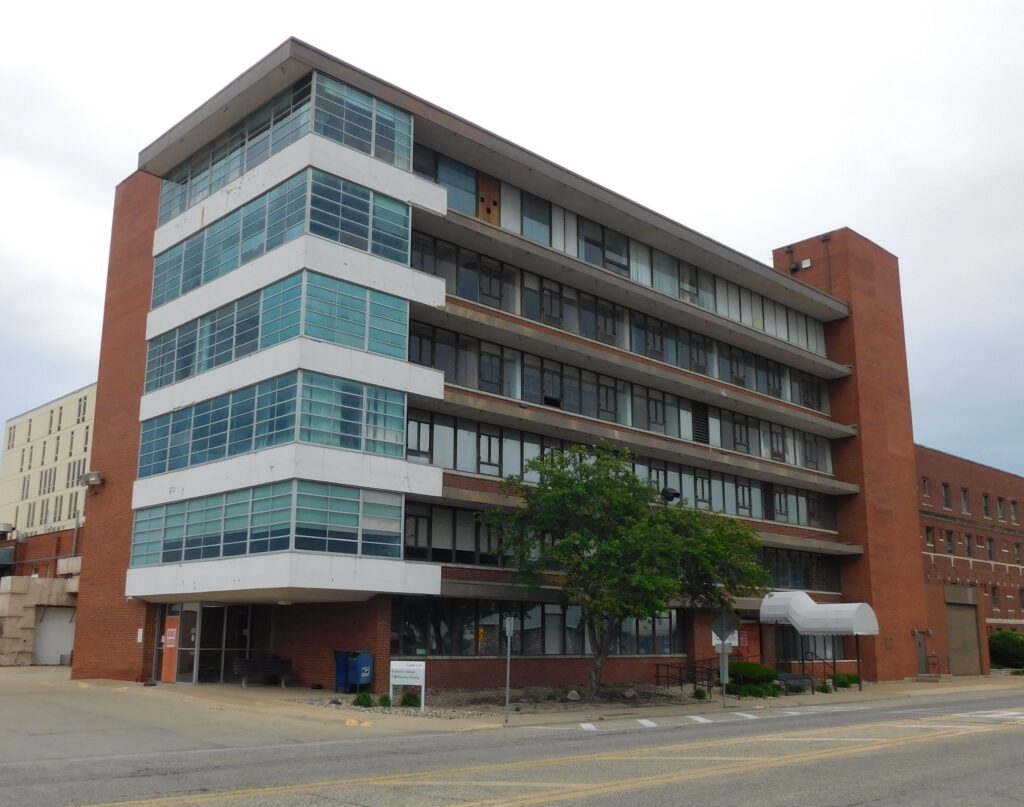
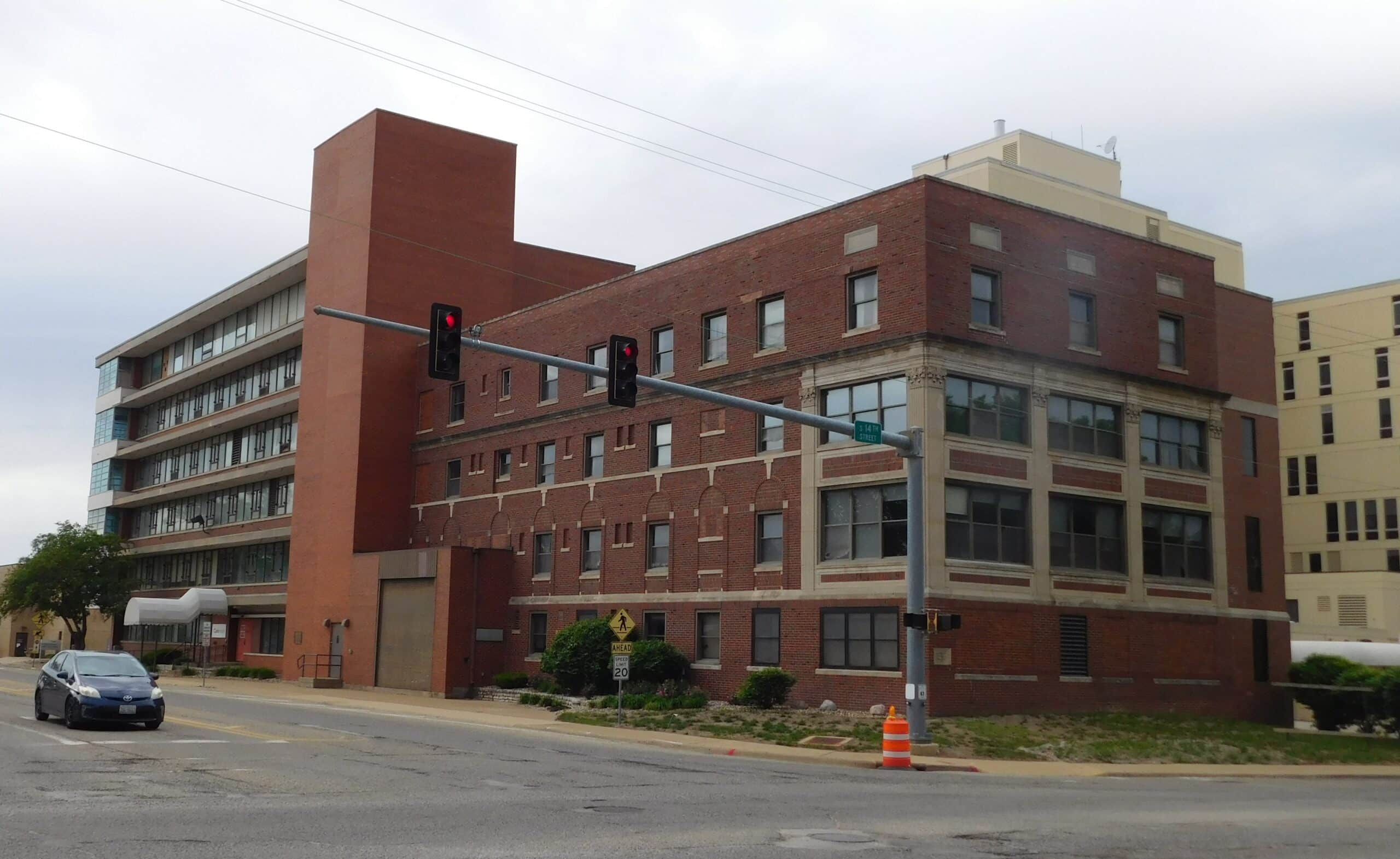
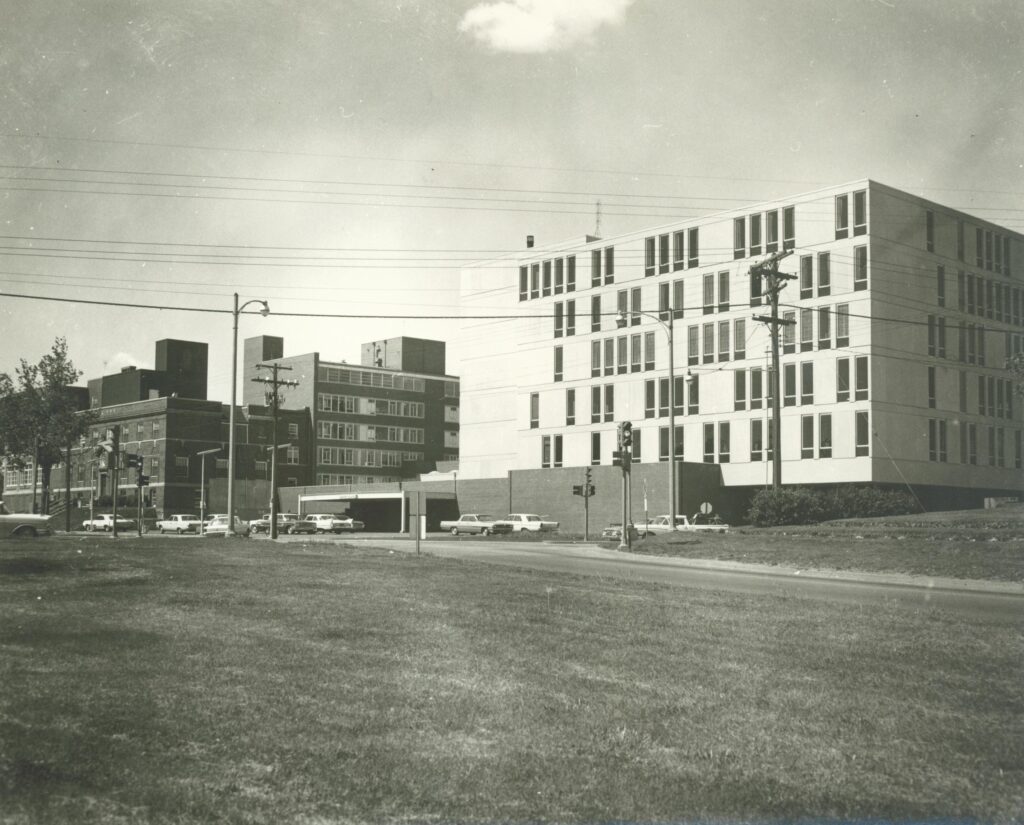
As Pekin continued to grow, Pekin Hospital again had to be expanded. In the early 1950s, $750,000 was raised locally and was matched by a federal grant, enabling the construction of a six-story $1.5 million addition on Park Avenue that increased the hospital’s capacity to 150 beds. The expansion was formally dedicated on 19 June 1955.
“But Pekin’s growth continued, and some of the older parts of the hospital became outmoded, so in the early 1960s another drive was undertaken,” says the Sesquicentennial. “This one succeeded in raising $1 million locally, and hospital officials borrowed another $1.5 million from a firm in Wisconsin, thus providing the necessary funding for the most recent expansion on Court Street. The main entrance once again was moved, and presently leads into this new six-story addition. Total capacity is now over 230, and plans call for the erection of a sixth and seventh floor on this newest addition which will house an intensive care unit and the obstetrics ward. As these floors are made ready, other areas of the older parts of the hospital will be closed (in fact, at least two floors are not in use now), and the total capacity will be around 250.”
It was in 1976 that those additional two stories were built, housing intensive and coronary care as well as obstetrics and pediatrics. Then, from 1979 to 1981, areas of the 1932 and 1954 additions were renovated to make room for pharmacy, medical records, a medical library, electrocardiography, respiratory therapy and radiology.
On 23 June 1985, ground was broken on a $10.1 million addition that would include surgery and radiology as well as a lobby, pharmacy, gift shop, restaurant and Park Court Medical Center. The building program moved the main entrance from Court Street to 13th Street, where it is today.
In Jan. 2018, Pekin Hospital completed the process of affiliation with Des Moines, Iowa-based UnityPoint Health, becoming “UnityPoint Health-Pekin” and joining a system that a few years ago included Methodist Medical Center (“UnityPoint Health-Methodist”) and Proctor Hospital (“UnityPoint Health-Proctor”) in Peoria. A year later a state-of-the-art Pekin physicians center opened at Griffin and Veterans Drive on Pekin’s east end – a building project initiated by Pekin Hospital in 2015, before the hospital affiliated with UnityPoint Health.
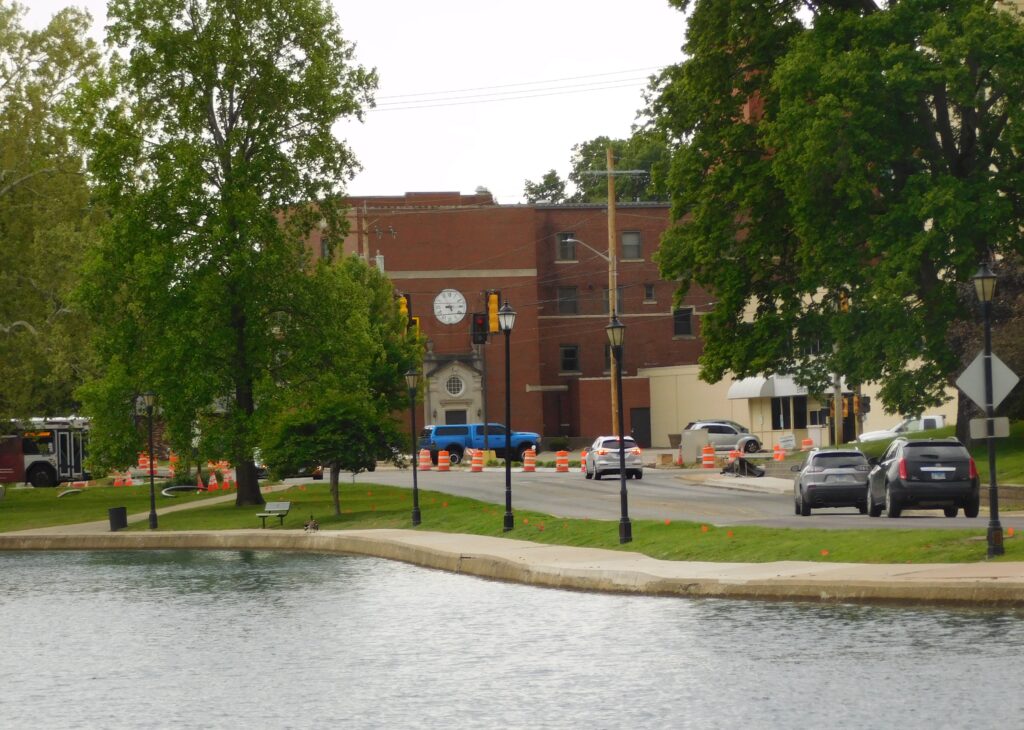
On 1 April 2023, Pekin Hospital was acquired by Urbana-Champaign-based Carle Health system, thus become “Carle Health Pekin Hospital.” In April of this year, Carle Health announced a nearly $8 million project of improvements and remodeling of Pekin Hospital that will include the demolition of the oldest remaining parts of the hospital along Park Avenue and South 14th Street, replacing them with new structures, a cafe, and green space.
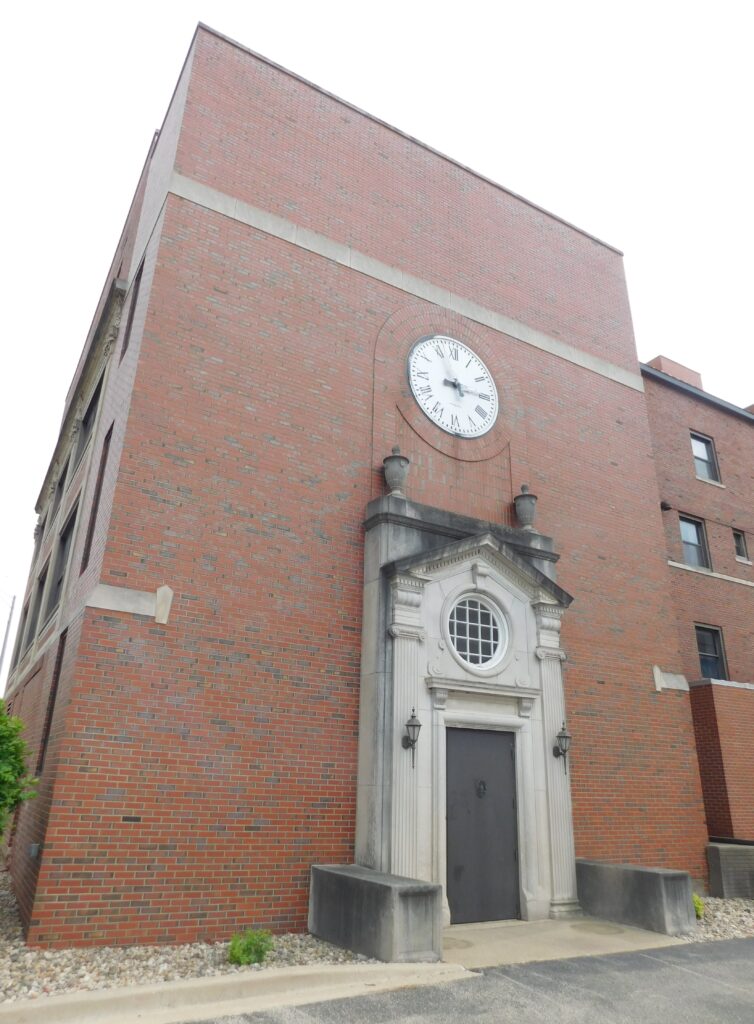
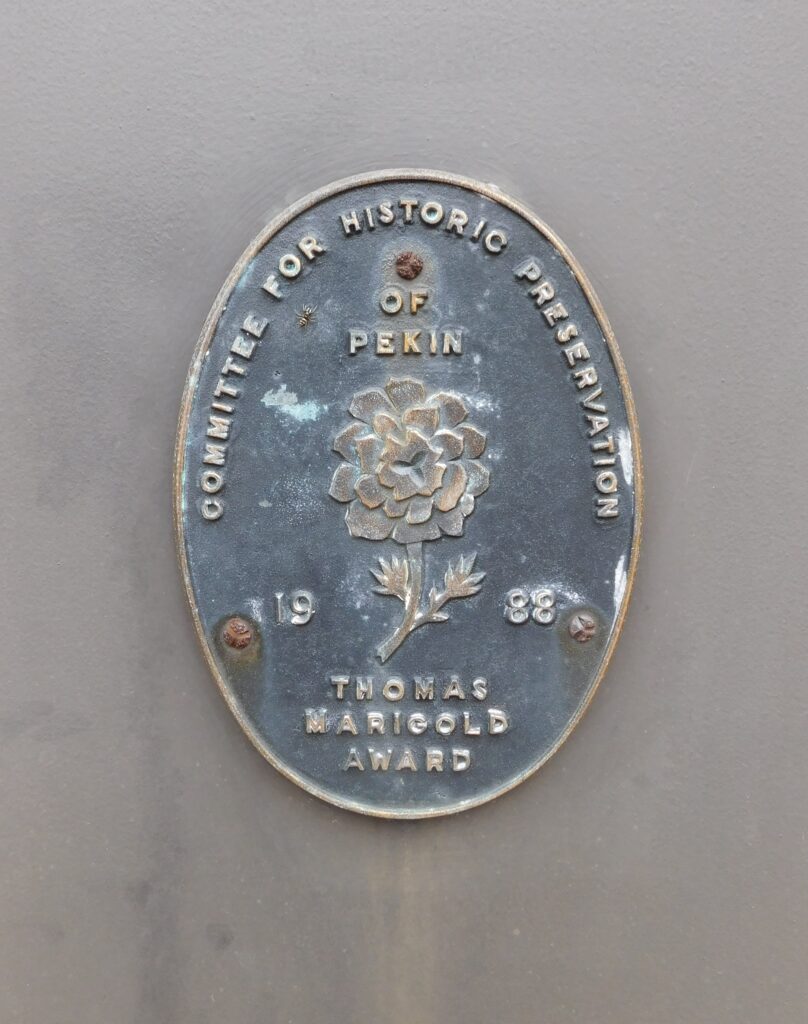
What will be the fate of the historic 1918 hospital entrance, which was granted a Thomas Marigold Award in 1988 by the Committee for Historical Preservation of Pekin, has not been announced. Community members have expressed a hope that the 1918 entrance will be spared the wrecking ball.